Archive | Dining Cars RSS feed for this section

Thailand’s “Death Railway”: Adventures on the Eastern & Oriental Express, Part II

25 Jun

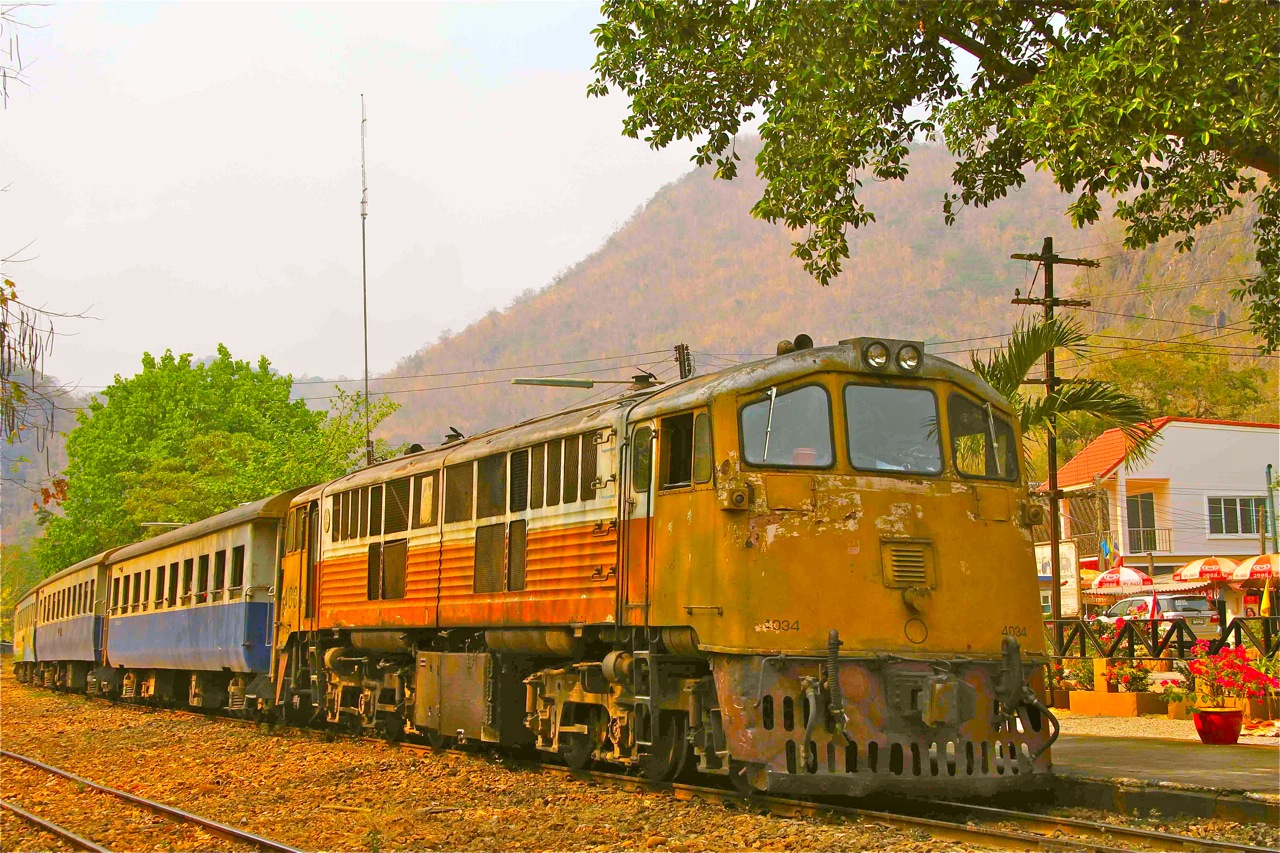
Third Class local passenger train at Nam Tok station. IRT photo by Bruce Anderson.

Editor’s note: To read Part I of Mr. Anderson’s adventures, please click here.

After deciding to book the Epic Thailand trip on the Eastern & Oriental Express (persuaded by Eleanor Hardy’s Track 25 blog), I opted to add the short Singapore-Bangkok route to the beginning of my adventure so that I could experience and see even more of this fascinating South Asian region. But unexpected hiccups while en-route to Bangkok left me wondering whether I’d make my primary Epic Thailand departure…

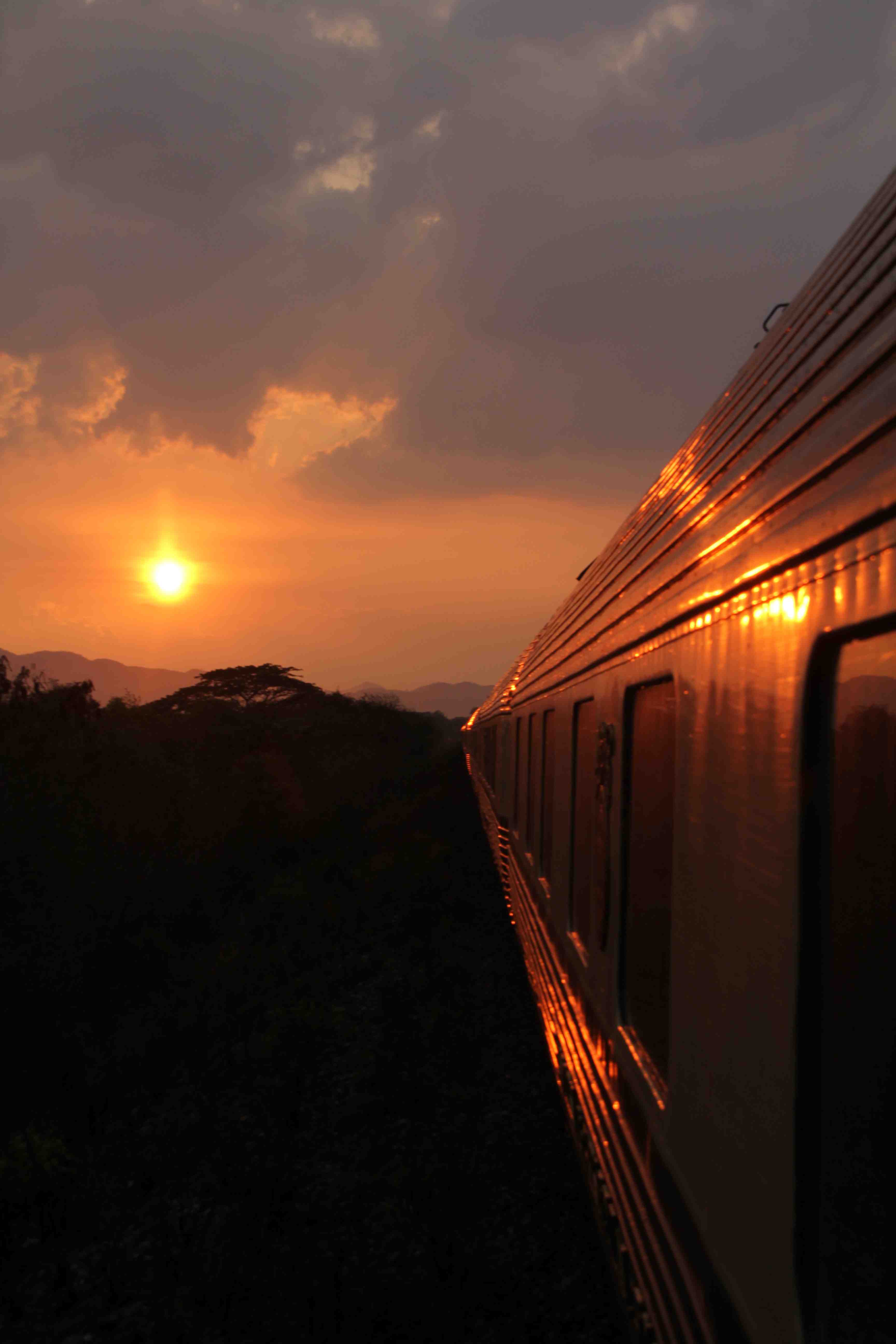
Eastern & Oriental Express at sunset. IRT photo by Bruce Anderson.

Our Singapore-Bangkok itinerary was thrown off course first by a stalled local train in Malaysia and then by an engine failure just across the Thai border (the E&O is contracted by law to use only Malaysian and Thai Railway locomotives), putting us significantly behind schedule, so much so that the side trip to the Kwai River Bridge was abandoned so that we could make a more timely arrival into Bangkok. So although I’d be able to join the IRT group departing on the Epic Thailand tour the next morning (Phew!), I was disappointed that I’d missed seeing the famous Kwai River Bridge.

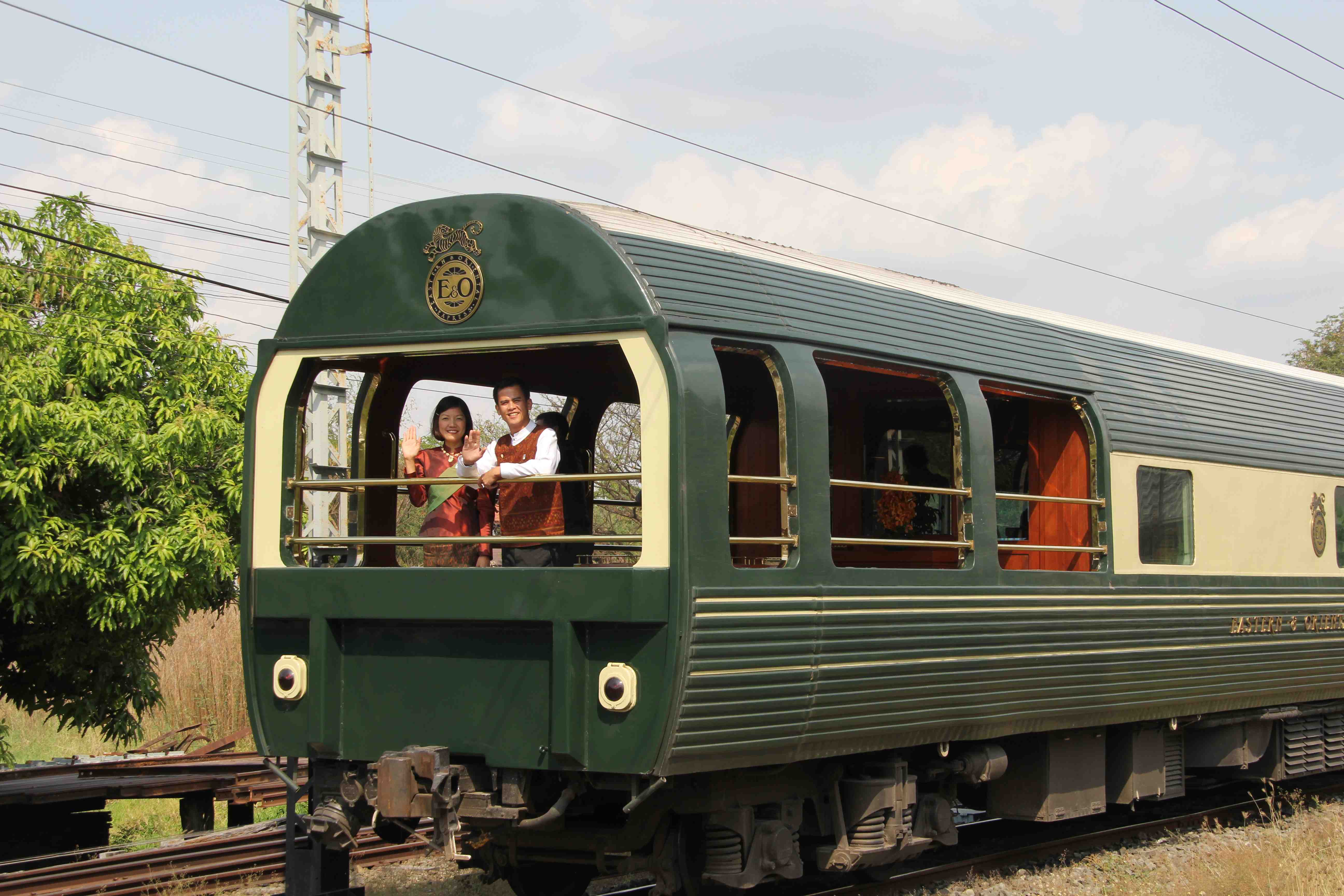
E & O observation car with bartenders Sopa & Andrek. IRT photo by Bruce Anderson.

My disappointment, however, was short-lived. The Eastern & Oriental Express staff arranged a complementary private car and guide to drive me out to Nam Tok upon my return to Bangkok, following my week-long Epic Thailand adventure. This was just one more shining example of the E&O’s outstanding commitment to customer service and satisfaction.

Despite Bangkok’s horrendous traffic, the trip to the Kwai Bridge was worth every exertion. Once across the bridge, I saw the two plinthed steam locomotives on site and had time for a brief visit to the cemetery before our return trip to the capital.

For more information and for reservations on the Eastern & Oriental Express, visit the Society of International Railway Traveler’s website or call us at (800) 478-4881.

The Al-Andalus: Whirlwind Tour Through Southern Spain

9 Jun

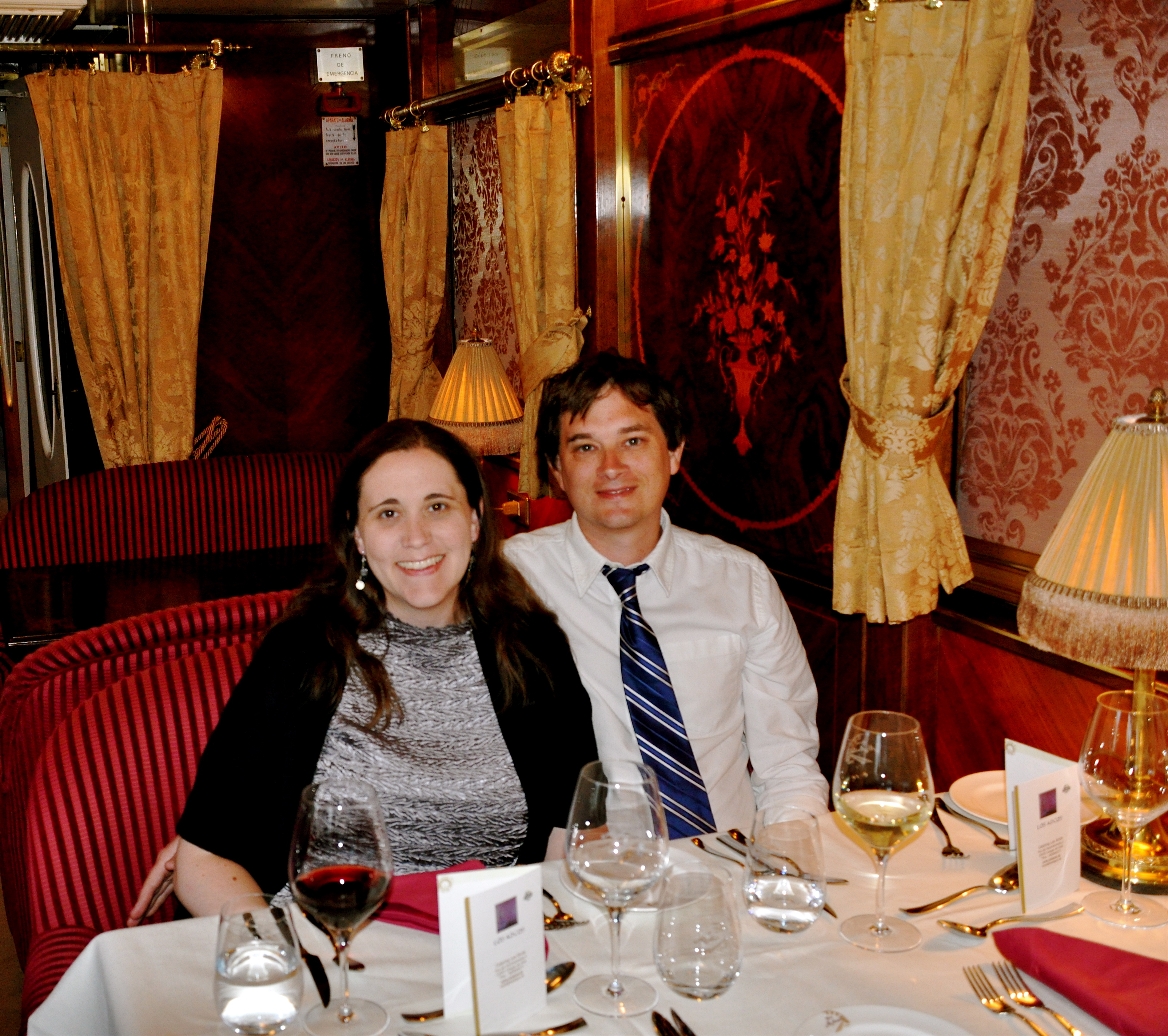
IRT writer Angela Walker and traveling companion Shawn Bidwell enjoy dinner on board the Al-Andalus.  IRT photo courtesy of Angela Walker.

Embarking on the Al-Andalus for the first time from Seville was a bit of an adventure, as my traveling companion Shawn and I had to feel our way around the Santa Justa station in lieu of proper signage. But once on board, the train was a welcoming and luxurious oasis that was well worth the initial confusion.

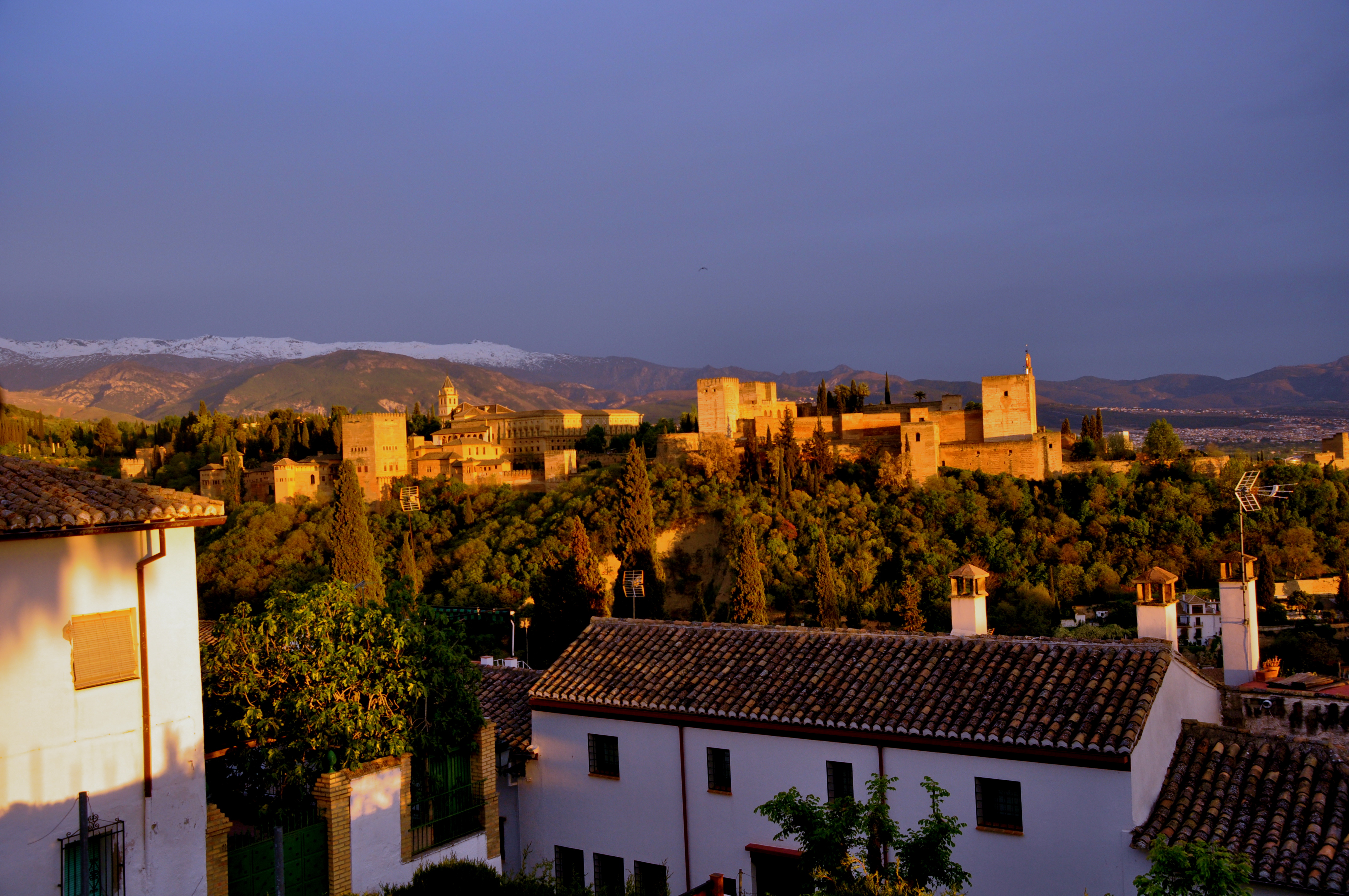
View of the Alhambra from our wonderful local restaurant in Granada. IRT photo by Angela Walker

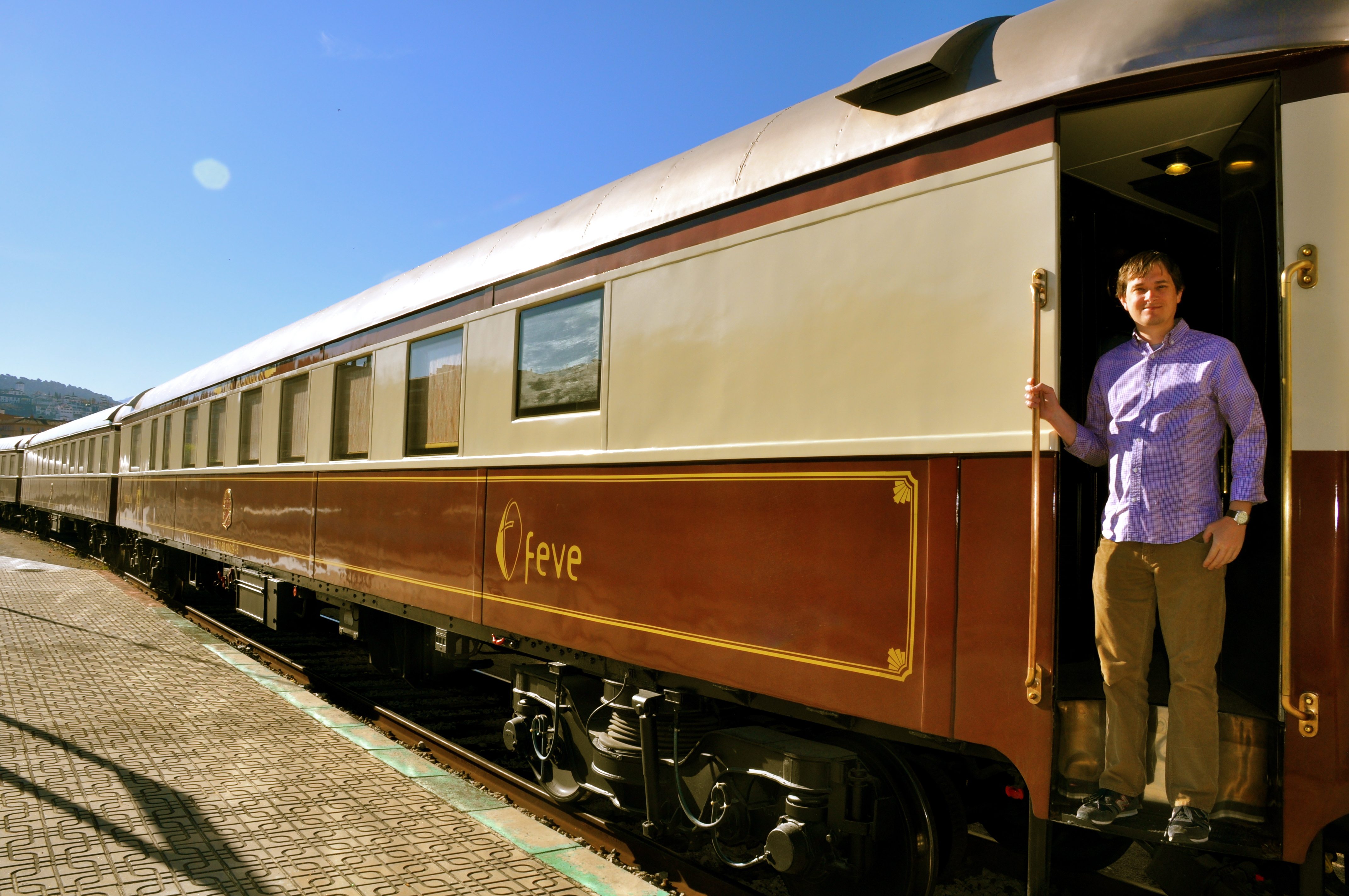
Al-Andalus passenger Shawn Bidwell disembarks the train in Granada. IRT photo by Angela Walker.

After being welcomed with champagne in the lounge, we settled into our Superior cabin, equipped with a lovely golden couch – which folded into a comfortable and roomy double bed at night – a writing table and chair, a spacious closet, and a full en-suite bathroom. The modern touches, such as vacuum toilet and individually controlled air conditioning do not take away from the beautiful Belle Époque design – striking sconces accentuate the carefully crafted inlaid wooden flower designs throughout the train.

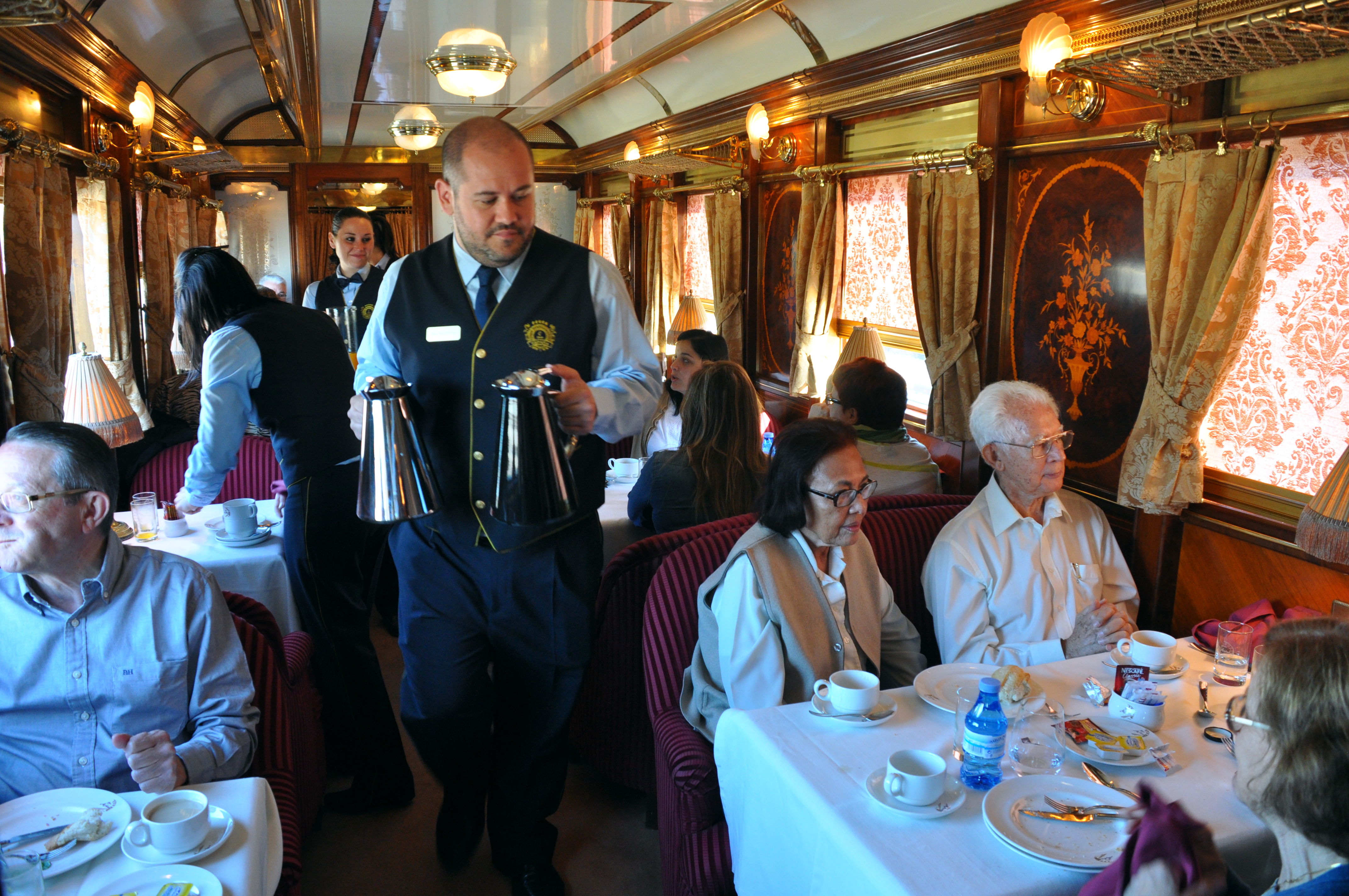
Most of the Al-Andalus sleeping cars were built in France in the late 1920s, as were all four public cars: lounge, two diners and bar car, which are as comfortable and beautiful as the sleepers. The dining and bar car is lovely in tones of red and gold, while the lounge car is a more muted gray with large welcoming couches.

We could have spent a week enjoying the comforts of the train alone, but the many stops along the way – Cordoba, Baeza, Ubeda, Granada, Ronda, Cadiz, Jerez, Sanlucar, and Sevilla – provided an exciting and whirlwind six-day tour through southern Spain. Granada’s stunning Alhambra, built by the Moorish rulers in the 14th century, was among the UNESCO World Heritage Sites we took in on our journey, as was the famed Seville Cathedral – third largest in the world.

The staff of the Al-Andalus is always at the ready with hot coffee and tea during daily breakfast on board. IRT photo by Angela Walker.

Some stops were difficult to navigate with a group (the small and winding streets of Cordoba, for example), but the Al-Andalus guides did an excellent job of keeping everyone lively and on track. Most travelers on our departure were Spanish-speakers – but not to fear. As we were two of only three English-speakers on board, Mercedes, our fantastic translator employed by the train, became our de facto personal guide. She was patient with any questions we had and made us feel quite at home.

For Part II of Angela Walker’s adventures on the Al-Andalus, please click here.

Thailand’s “Death Railway”: Adventures on the Eastern & Oriental Express, Part I

4 Jun

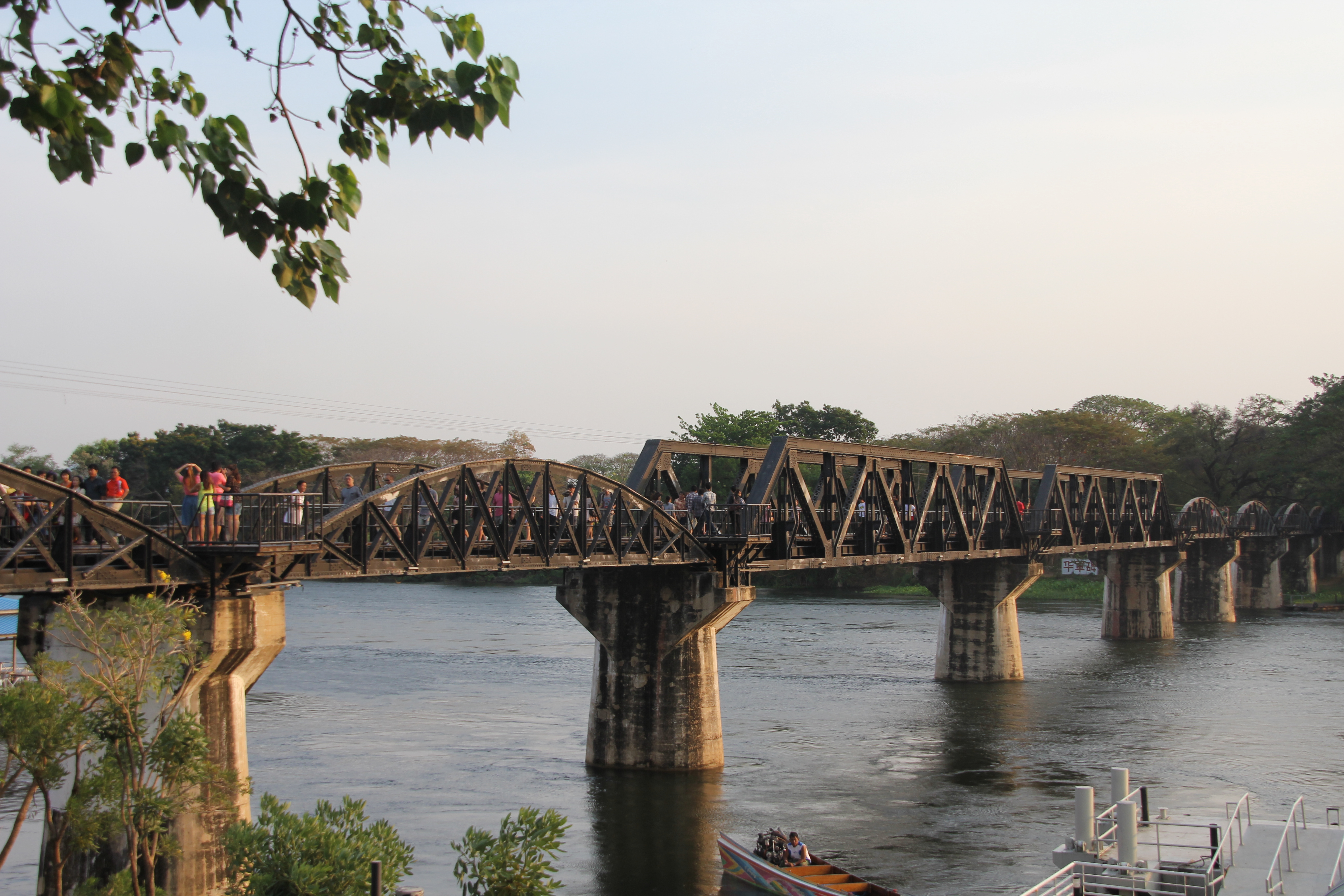
The Kwai River Bridge. IRT photo by Bruce Anderson.

Since its inception, The Eastern & Oriental Express has been on my bucket list of trains to ride. But it was IRT President Eleanor Hardy’s Track 25 blog that finally made me book the trip. And as long as I was going halfway around the world, I decided to add the standard E&O four-day Singapore-Bangkok route to the beginning of my trip.

Unlike their semi-annual one-week tours (ours was Epic Thailand), this route runs regularly during high season and continues on a less frequent schedule throughout the year. In fact, the journey is more like a scheduled train than a tour, as stops are made to entrain passengers at the Malaysian cities of Kuala Lampur and Butterworth.

The train is much more than “general transportation,” however, and is every bit as impressive as outlined in Ms. Hardy’s blog. The staff is top-notch – attentive but not overbearing. What I didn’t expect was to be greeted by name by bartender Andrek asking if I was ready for my iced tea! How did he know? Of course, preferences were indicated on the booking form, but those are often a formality soon forgotten.

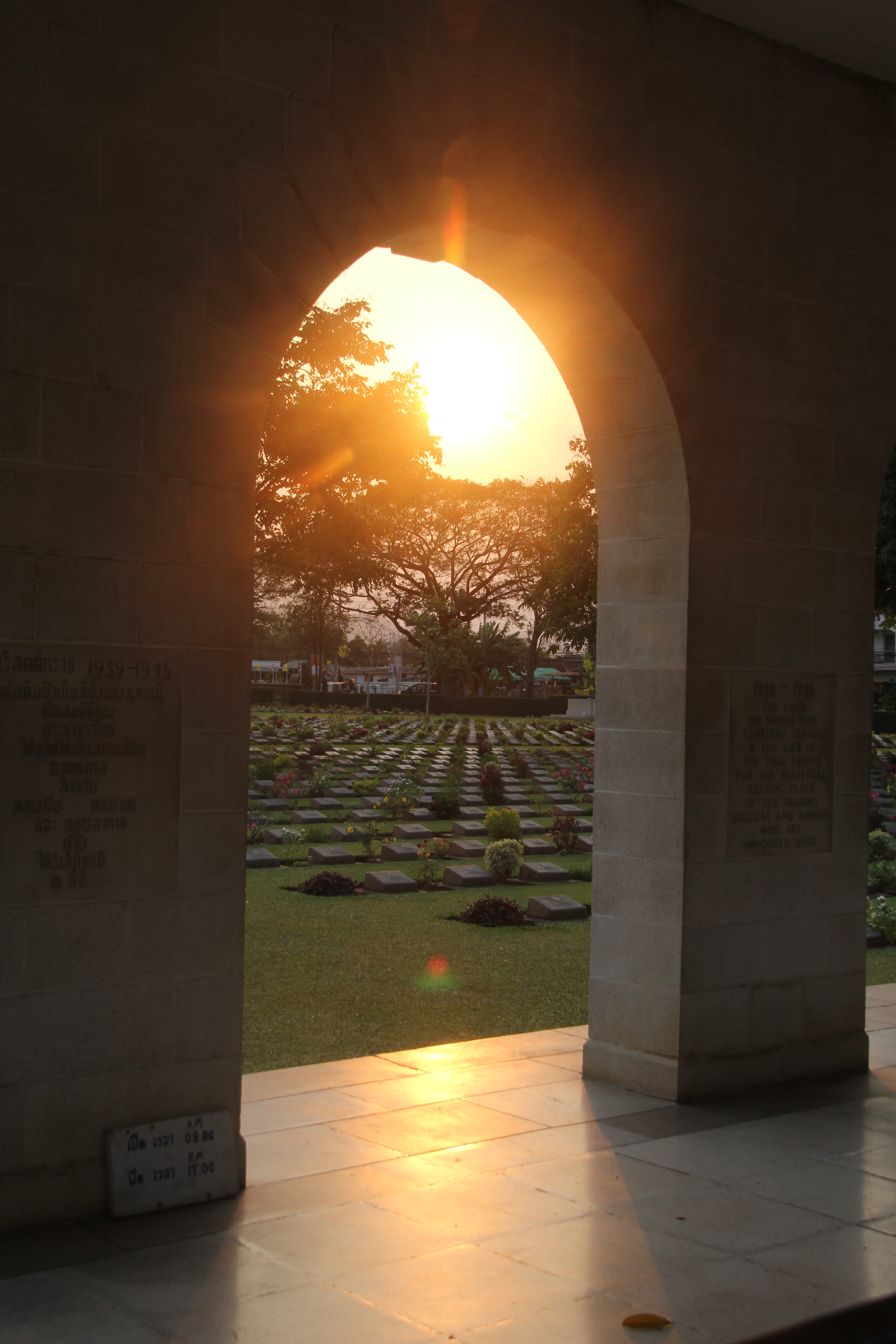
The War Cemetary at Kanachanaburi. IRT photo by Bruce Anderson.

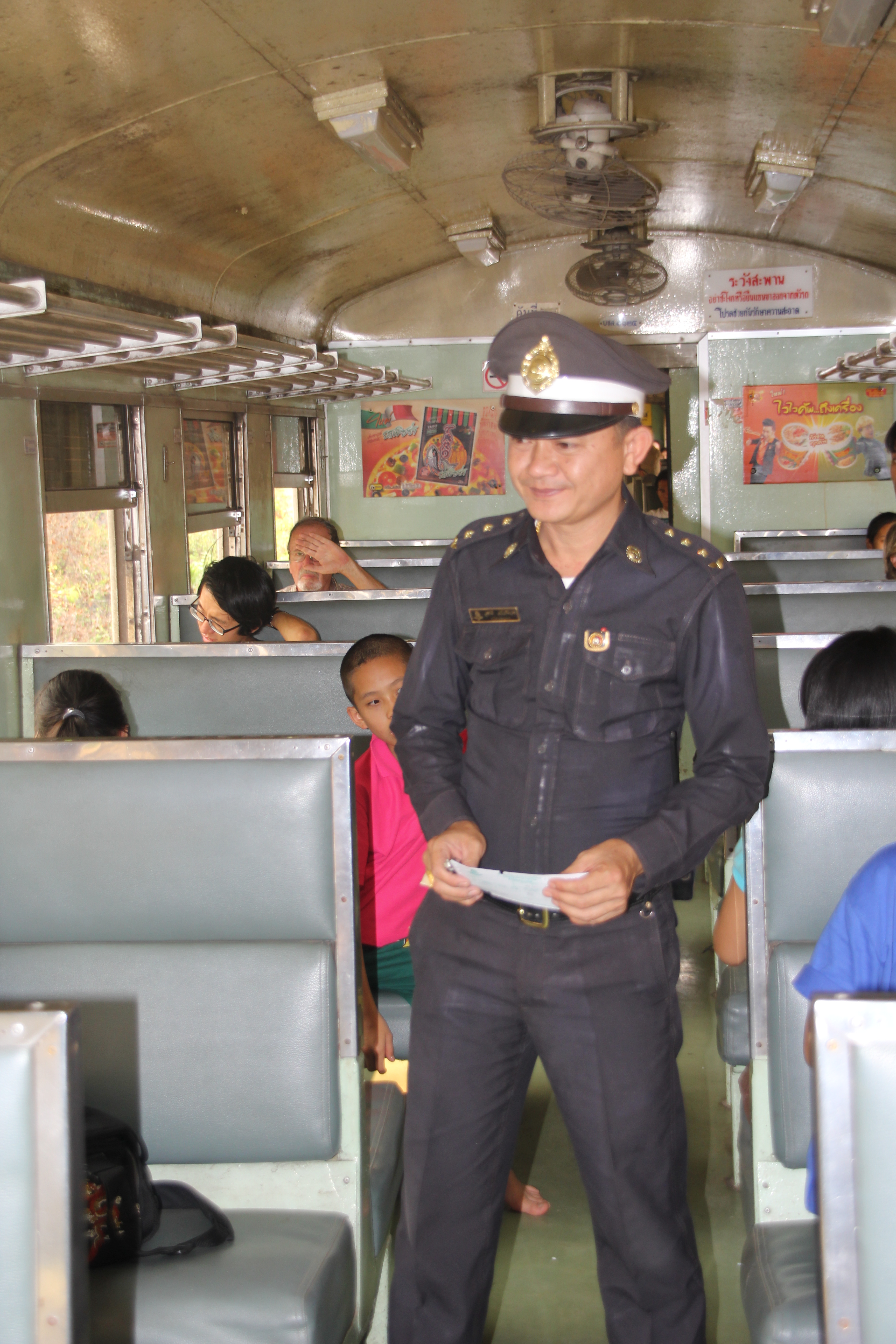
Conductor on local train. IRT photo by Bruce Anderson.

Off-train tours are offered in the colonial Malaysian city of Georgetown and to Kanchanaburi, site of the Kwai River bridge. I, however, had planned to venture out on my own, leaving the E&O at the Kwai River Station and continuing by local train to the end of the line, 45 miles north at Nam Tok.

This track is what’s left of the Thai-Burma “Death Railway,” constructed by allied prisoners of World War II and made famous by the movie “Bridge Over the River Kwai.” The Allied War Cemetery at Kanchanaburi, with over 6,000 graves, lies in silent testament to the horror of what transpired there.

But all was not going according to plan. Would I make it to Bangkok in time, I wondered, to join the 19 other IRT travelers leaving on the Epic Thailand tour?

For part II of Bruce Anderson’s adventures in Thailand, please click here.

VIA Canadian Winter Journey Unveils Top Train’s New Décor

11 Jan
The Canadian

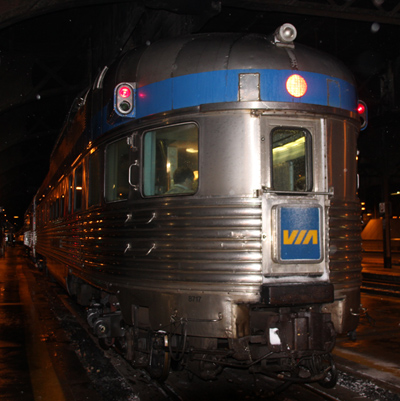
VIA Rail's Toronto-Vancouver Canadian. Photo by Bruce Anderson

Vacations during the holiday season often conjure up images of someplace warm, perhaps celebrating some foreign country’s unique New Year’s traditions. My traditional New Year’s trip is on VIA Rail’s Canadian across Canada, often paired with my other passion: NHL Hockey.  I collect hockey arenas the same as I do rail mileage and train journeys. This time, my trip took me to Winnipeg to see a New Year’s Eve game.

It was also my 50th trip on the Canadian since 1977.
What I rode is not the much ballyhooed — and delayed — luxury service which will include completely revamped cars with dedicated attendants, larger accommodations with showers and flat screen TV’s. While waiting for that to materialize, now tentatively scheduled for 2013, the existing train has received a complete makeover. Although rooms remain the traditional Pullman size, where else except in a private railroad car can one ride a train straight out of the 1950’s?

It has been argued that today’s train isn’t the “real” Canadian, since it now mostly follows the more northerly Canadian National routing. But my consist, with the exception of one ex-Amtrak re-built coach (Amtrak, are you listening?), was made up entirely of original Canadian Pacific equipment.  All interiors have been updated with new carpeting, wall coverings, seat fabrics and lighting.

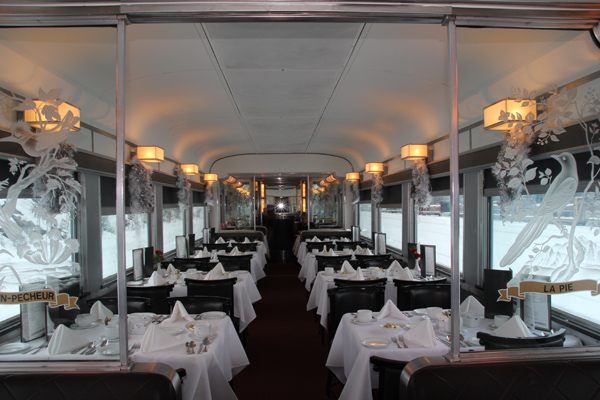
Before and after: Above, the refurbished and redecorated diner on the Canadian. Walls and ceiling are white, making the car much brighter than before. Chairs have gone from pink to dark gray. Square plastic lights have replaced the art deco ones. The dark blue seat covers for dinner also are gone. Below, the Canadian's diner before the refurbishment. Photos by Bruce Anderson

The diner, previously pretty in pink, is now brightened with white walls and ceiling with dark grey seats. The famous original etched-glass partitions have been retained. Food is of the expected high standard and service is provided in a professional manner.

Dining car on the Canadian before the recent refurbishment.

The Park Car has been darkened with dark grey ceiling and frames around the dome windows, giving a warm appearance, which draws more attention to the view outside rather than in. And if you get tired of the northern Ontario scenery, movies can be screened on a new flat screen TV in the lounge beneath the dome.

The rear Park Car on VIA's Canadian

The Canadian's Park Car, looking down from the dome stairway to the lounge area. Photo by Bruce Anderson

While accommodations are the traditional Pullman size, the Cabin for One (ex-Roomette) and Cabin for Two (ex-Bedroom) provide a cozy atmosphere in which to sleep. Unlike Amtrak, all rooms have en-suite toilet and sink; however, the shower is down the hall. Sections or “berths” also are available, the only train left in North American where they can be found. (Sections were made famous in the “naughty” sleeper scene by Marilyn Monroe, Tony Curtis and Jack Lemmon in “Some Like It Hot.”) While sleeping accommodations on the Canadian are generally priced higher than Amtrak, fares in winter are about half those in effect during peak summer season.

Some may question traveling in winter through the “Great White North.” But I enjoy the lower passenger counts, and there’s plenty of heat. Besides, what could be better than sitting in a front dome seat at night, watching the signals change from green to red as the train passes by, the moon illuminating the snow-covered ground?

The schedule is heavily padded, so arrival is likely to be on time, as it was for me in both directions. But I wouldn’t advise booking a same-day flight at trip’s end, at least not in winter.

While not the Orient Express, the Canadian is in my opinion the best we have going in North America.

Editor’s Note:  When the new luxury service debuts, the equipment and service as described above will still be available on each departure at traditional pricing, according to VIA.  The Canadian runs three times weekly in each direction between Toronto and Vancouver. The Canadian is one of The Society of International Railway Traveler’s World’s Top 25 Trains for 2012; The IRT Society’s 13-day “Trans-Canada Rail Adventure” includes three overnights on the Canadian.

Author’s Note: (I traveled to Winnipeg to see its new MTS Centre and team host the Toronto Maple Leafs. Sadly, the mighty Detroit Red Wings don’t play in Winnipeg this year).

Vic Falls’ Steam Dinner Train Delights Cape-Dar Traveler

2 Dec
Victoria Falls Dinner Train

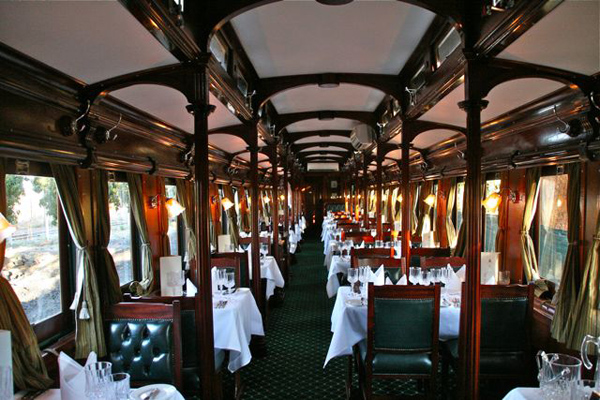
Dining Car Wembley, built in 1926. IRT Photo by Bruce Anderson

Victoria Falls is one of the great natural wonders of the world. I’ve seen it four times and never tire of the magnificent views.

But while the Falls has been called “the smoke that thunders,” few are aware that smoke of another kind can be found just across the bridge from the Victoria Falls Hotel in Zambia.

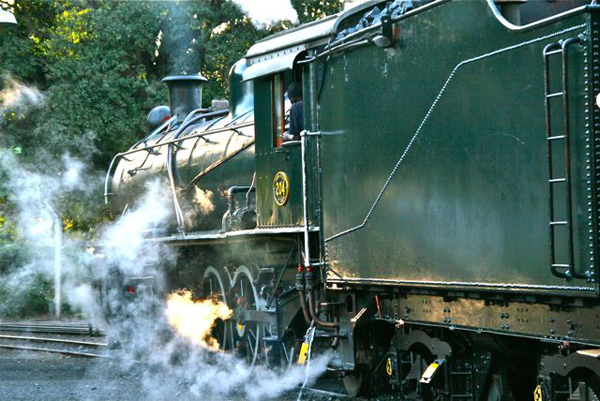
Steam Engine Class 12 of the Royal Livingstone Dinner Train

Steam engine 12th class 204, built by Northern British Locomotive works in the 1930. IRT Photo by Bruce Anderson

Nestled in a remote corner of town next to the Livingstone Railway Museum is the Royal Livingstone Express, a true throwback to the days of Rhodesian Railways’ passenger services. I had a chance to sample this vision of the past during my recent Rovos Rail trip to Dar Es Salaam with the Society of International Railway Travelers®. The Cape Town – Dar itinerary includes a overnight stop at the Falls.

Rovos groups stay at the Victoria Falls Hotel, on the Zimbabwe side. The hotel is beautiful, but it makes the trek to the dinner train a bit problematic. Getting there — one-way— included two van rides, the purchase of a double-entry visa at the Zimbabwe-Zambia border and a six-mile bus ride. But the trouble and expense are well worth it.

It is indeed quite a train.

Its five cars all have been either restored by or purchased from Rovos Rail. They include a kitchen car and two dining saloons, one of which was the unique, pillared diner “Wembly,” built in 1926. Rounding out the consist are a lounge and, bringing up the rear, an open-platform observation car.

The Royal Livingstone Express Dinner Train

The Royal Livingstone Express Dinner Train. IRT Photo by Bruce Anderson

The train’s route first took us through Livingstone, where the entire township seemed on hand to wave, with the younger set chasing after us as well. We spent the rest of our time spotting elephants as we chugged through Mosi-oa-Tunya National Park. True, most of our journey was in winter darkness. But the real attraction was what was happening inside the train.

The train’s two chefs turned out a five-course, freshly prepared meal worthy of a fine dining restaurant. It was served while the train was stopped at the far end of its five-and-a-half-mile run. Our entrée, lamb shoulder, was delicious, with the meat just about falling off the bone. A vegetarian option also was available.

After dinner, drinks were served in the two lounges during the train’s return to Livingstone. Train enthusiasts in our group were treated to the sounds and smell of a Class 12 steam locomotive. For the return trip, it ran tender first, coupled to the back of the train’s observation car. It was just about the closest one can get to a working steam locomotive without actually being on the foot plate.

Cost for the train including transfers (but excluding visas) is $160 U.S. and can be booked through The Society of IRT. Dinner runs usually are made Wednesdays and Saturdays with a minimum of 20 passengers required. Dress code is smart casual. I would highly recommend this unique experience, particularly for a second-time visitor, as I was, who has previously done some of the area’s more well-known tourist activities.

For more information on the Royal Livingstone Express, or on Rovos Rail’s Cape Town – Dar es Salaam tour, call (800) 478-4881 within the U.S. and Canada. Elsewhere, call (502) 897-1725.

Gran Lujo: A Grand Upgrade

15 Nov

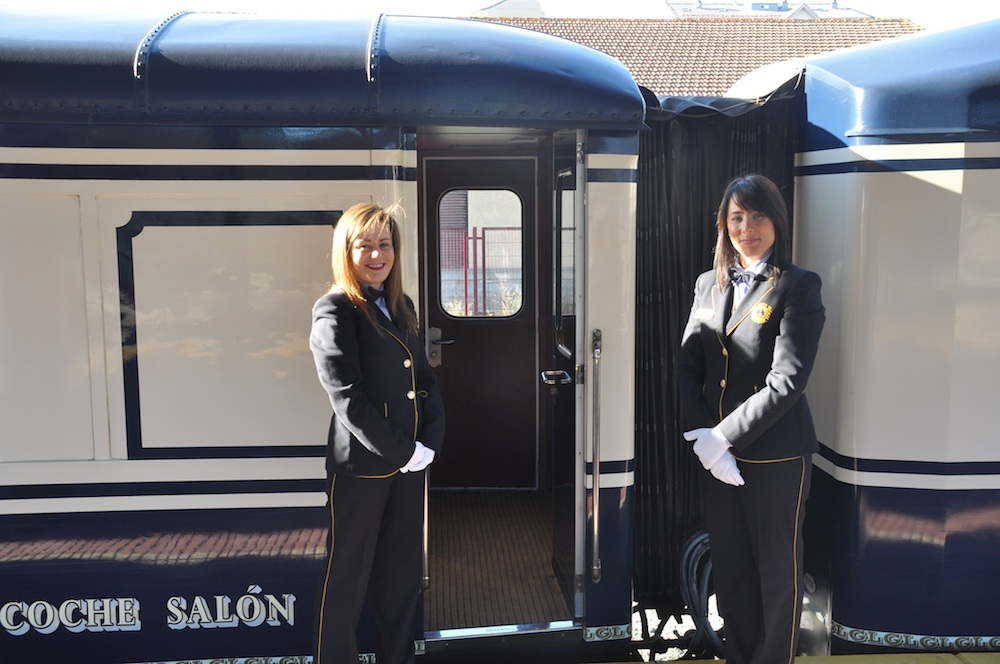
The staff of the El Transcantabrico Gran Lujo welcome passengers aboard in Ferrol, Spain. IRT Photo by Angela Walker.

The neatly uniformed staff snaps to attention as we approach El Transcantábrico Gran Lujo at Ferrol Station. As we settle into the lovely lounge car, the staff serves champagne all around.

Our tour manager, Barbara Callisto, with her charming, infectious smile, introduces the staff, explains the train layout and toasts the trip ahead, first in Spanish, then English. This grand and intimate introduction would set the tone for my trip, which I enjoyed just two weeks ago.

It lived up to some of my expectations and exceeded others. Its operator, FEVE, proved once again that its trains are firmly ensconced in the Society of IRT’s World’s Top 25 Trains list. The Gran Lujo began service in May 2011 as an upgraded version of the El Transcantábrico Clásico, which I already knew was a fabulous train. I had high expectations.

The Gran Lujo comprises refurbished cars from the Clásico train set, with upgrades and improvements throughout. Seven sleeping cars from the Clásico were gutted and redone, doubling the size of the suites and alleviating one of the few complaints of the Clásico experience: cabins that are too small. Each Gran Lujo suite takes up half a train car.
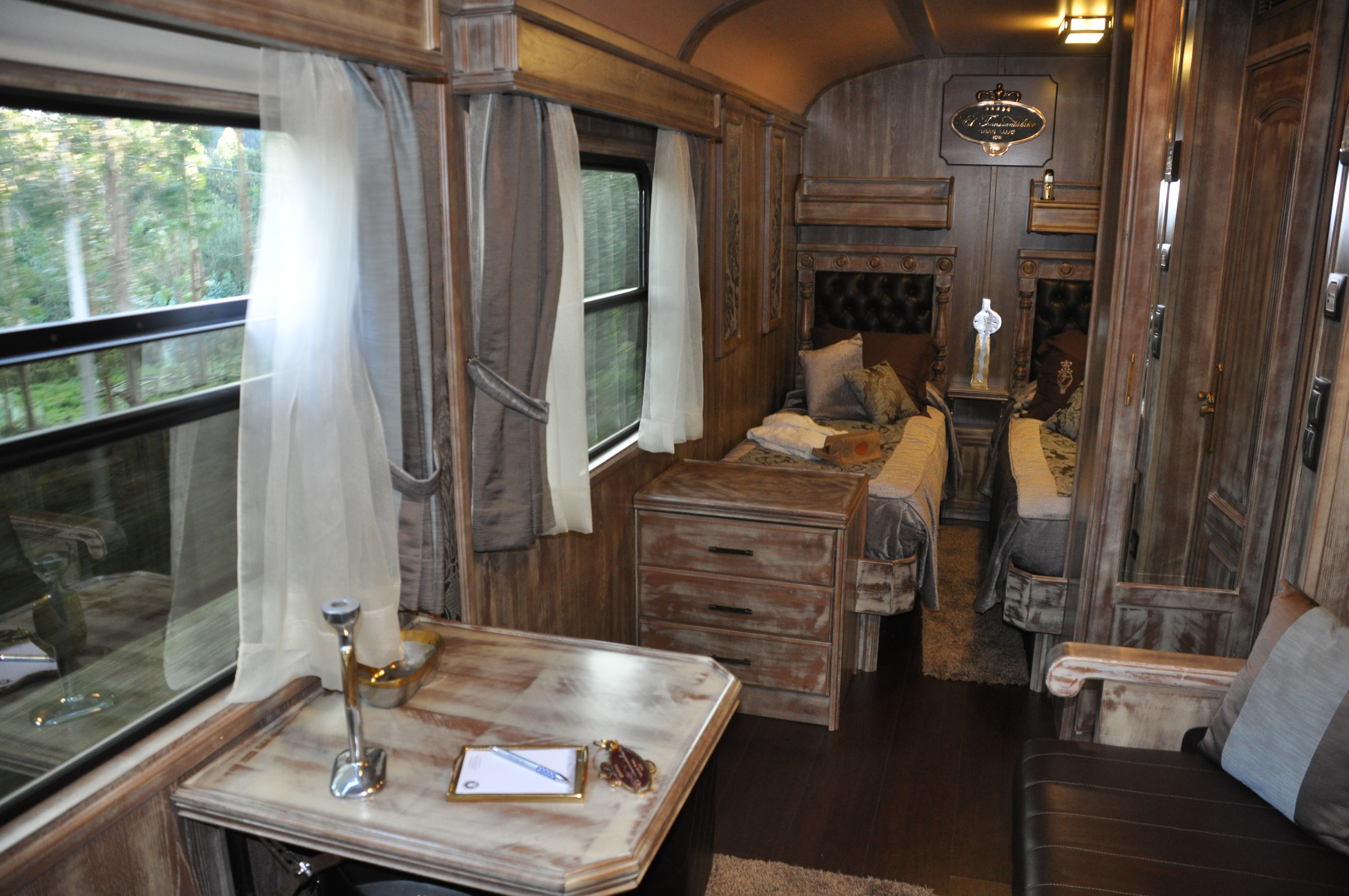
My comfy suite on Gran Lujo. IRT photo by Angela Walker.

My room is Suite Princess 6, one of the four twin-bedded suites on the Gran Lujo. First, I notice the layout—surprisingly spacious for  a narrow-gauge train—twin beds, two windows (which open), couch, table, two stools, wardrobe, chest of drawers, desk with computer and two television screens(!) Not to mention a full en-suite bathroom, complete with the most complicated shower I’ve ever encountered – functions for three shower types, hydro-massage and sauna.

The twin beds are side by side, separated by a narrow aisle. At the end of the one bed is a narrow wardrobe with eight hangers and three shelves; at the end of the other is a chest containing three drawers.

I quickly unpack my things, easily fitting them into the storage space provided. (Note, however, that I am traveling alone. Couples booking a twin-bedded suite may end up fighting over the eight hangers. Double-bedded suites have a wardrobe twice the size of the original, extra hangers to match, but no chest.) Then I tuck my suitcase in a hidden compartment under the couch.
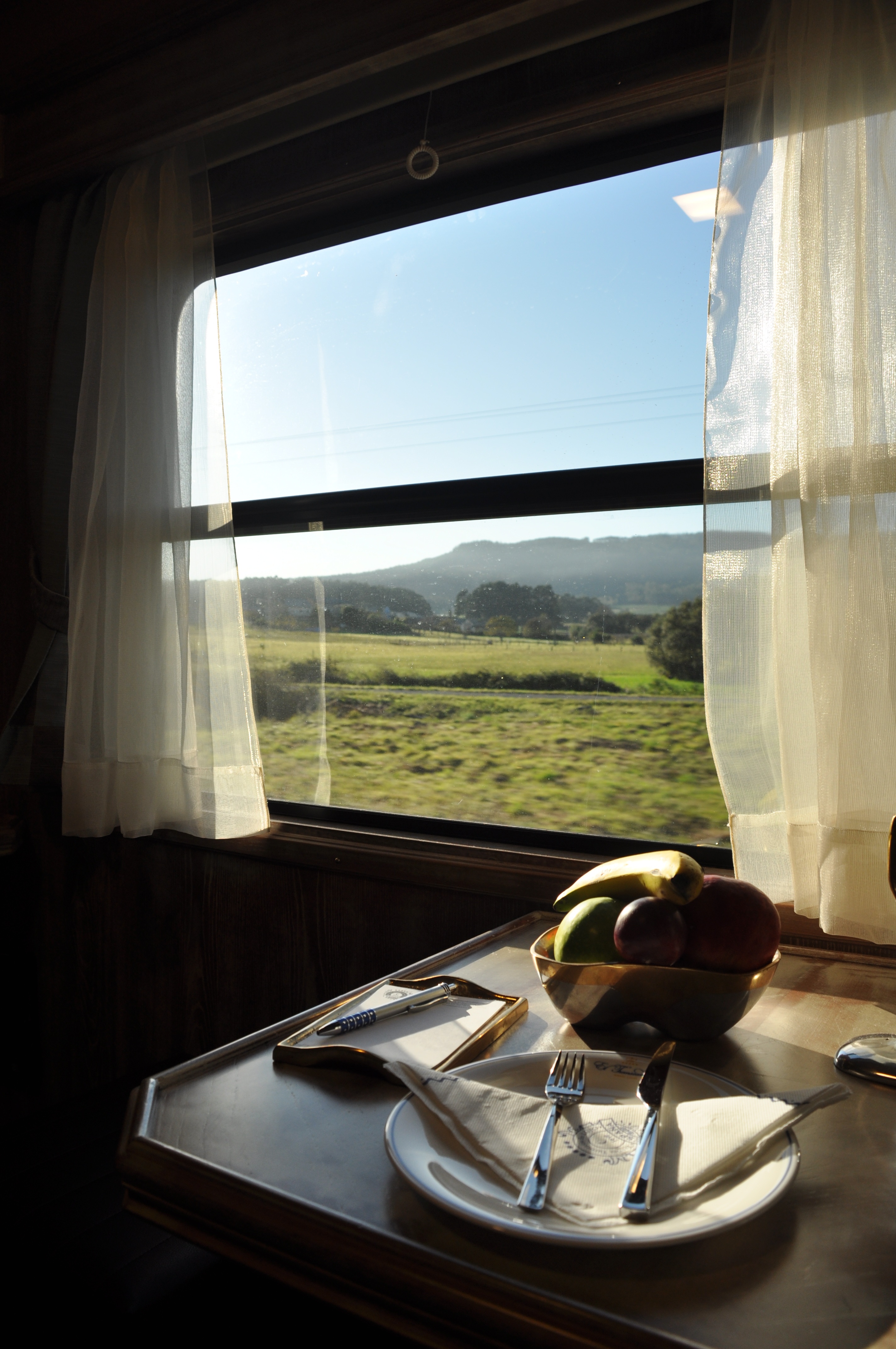
Watching the passing Northern Spain scenery from my suite window. IRT photo by Angela Walker.

I explore every bit of the suite, with distressed wood paneling, decorated in grays and browns. I discover a minibar, safe and several more clever places for storage, including the stools which open for an unexpected storage box.

Technology has been successfully incorporated into the suites – there is digital climate control as well as a panel to operate the cabin “entertainment” — three channels of music and a fourth, which turns on the television screens. If the passing Northern Spain scenery and off-train tours are not enough for you, there are movies, news and weather available, as well as a computer with internet access.

The train has wireless internet, but this does not work while the train is moving, and on my trip is not reliable the first few days, even when the train is stabled .

Each morning breakfast is served on board – a buffet including a variety of breads and sweets, cereal, fruit, yogurt, crackers, meats and cheeses, juices and Spanish tortilla. The biggest draw at breakfast quickly becomes the freshly carved Iberian ham. Delicious!

At breakfast, the efficient staff serves me freshly squeezed orange juice and offers me coffee. They also give me a
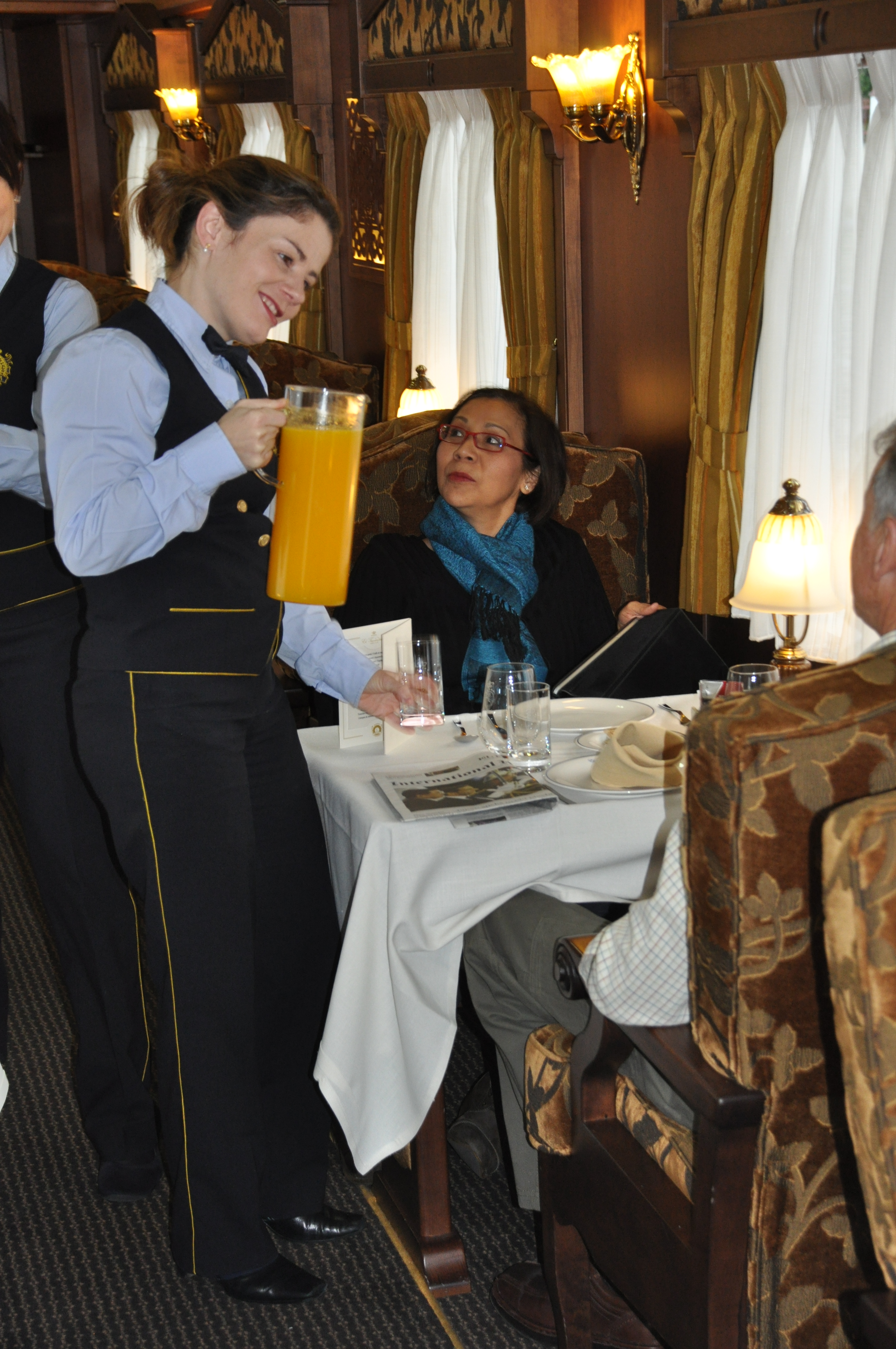
Fresh orange juice is served by the efficient staff of the El Transcantabrico Gran Lujo. IRT photo by Angela Walker.

menu—in addition to the buffet, there is a full breakfast menu, with offerings such as crepes (with chocolate, strawberry, caramel or a variety of jams), caviar canapé, and made-to-order eggs, including omelets with your choice of ham, mushrooms, sausage, bacon and cheese.

After a few days, the staff has memorized the coffee orders and delivers it without asking – in my case, café con leche.

One dining car seats 16 and is decorated in gold and brown, with comfy plush chairs at tables for two. Beautifully latticed panels cover the lights. At each table is a lamp by the window. The other dining car seats 10 at tables for two and is decorated in red and light brown.

There’s a bar at the end of this car, where the morning coffee is brewed and drinks are served throughout the day.

Walking through this dining car offers a glimpse of your week ahead: the walls are decorated with paintings of sightseeing along the route, such as Playa de Catedral (Cathedral Beach), which we will walk along in a few days. Likewise, the beautifully painted panels above the windows colorfully depict stops along the way, as well as the train itself.
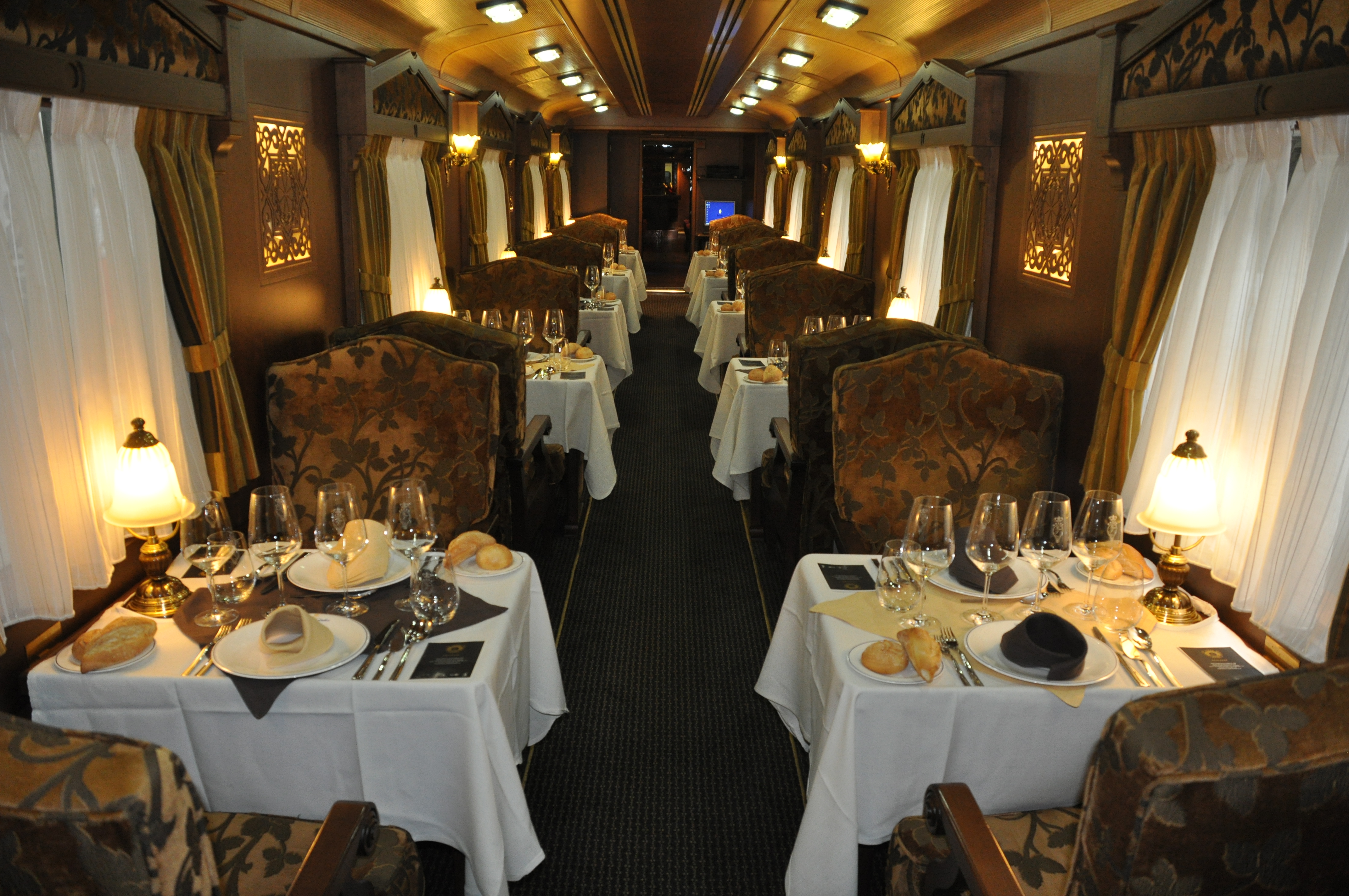
Tables for two in one of the Gran Lujo dining cars set for a four-course lunch on board. IRT photo by Angela Walker.

Table settings are complete with El Transcantábrico plates, cups and glasses. Other than breakfast, we take our meals off the train in restaurants to sample the local cuisine. However, lunch is served on board the last day, giving us a chance to enjoy the service and watch the passing scenery.

It is also the perfect time to enjoy the lounge car, with a panel of panoramic windows, two cream couches, two armchairs and three tables, each with three chairs, seating 17 in all. Many of my fellow passengers linger here after breakfast, reading the numerous newspapers provided daily.

There is also a “disco car” in the consist, where live music is performed several nights during the journey. This has two big couches, two smaller couches and a dance floor, as well as a bar – and stays open and lively until the last person retires. The last night there’s a farewell party in the disco car, where the staff cheers everyone and crowns a “Mr. & Ms. Transcantabrico,” all in good fun.
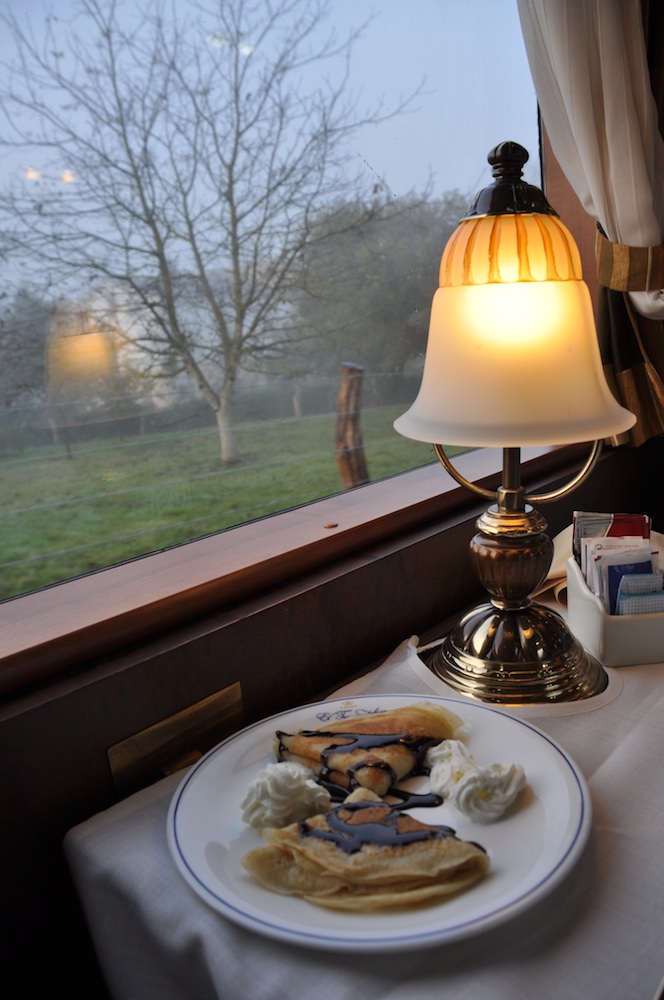
Breakfast crepes were just one of many offerings on Gran Lujo. IRT photo by Angela Walker

The staff are not many, but they’re efficient. There are five serving and two engineers, and the driver, as well as the train manager, Paula. And of course, there is our ever-upbeat, energetic and helpful Barbara, who speaks five languages and happily explains everything in Spanish and English.

Our diverse group includes 18 Spanish-speakers from Spain and Mexico and five English-speakers, hailing from Australia, the U.S., England and Switzerland. Our train, running in late October, is the last of the season. Carrying just 23 passengers, it’s not full, making for an even more intimate experience.
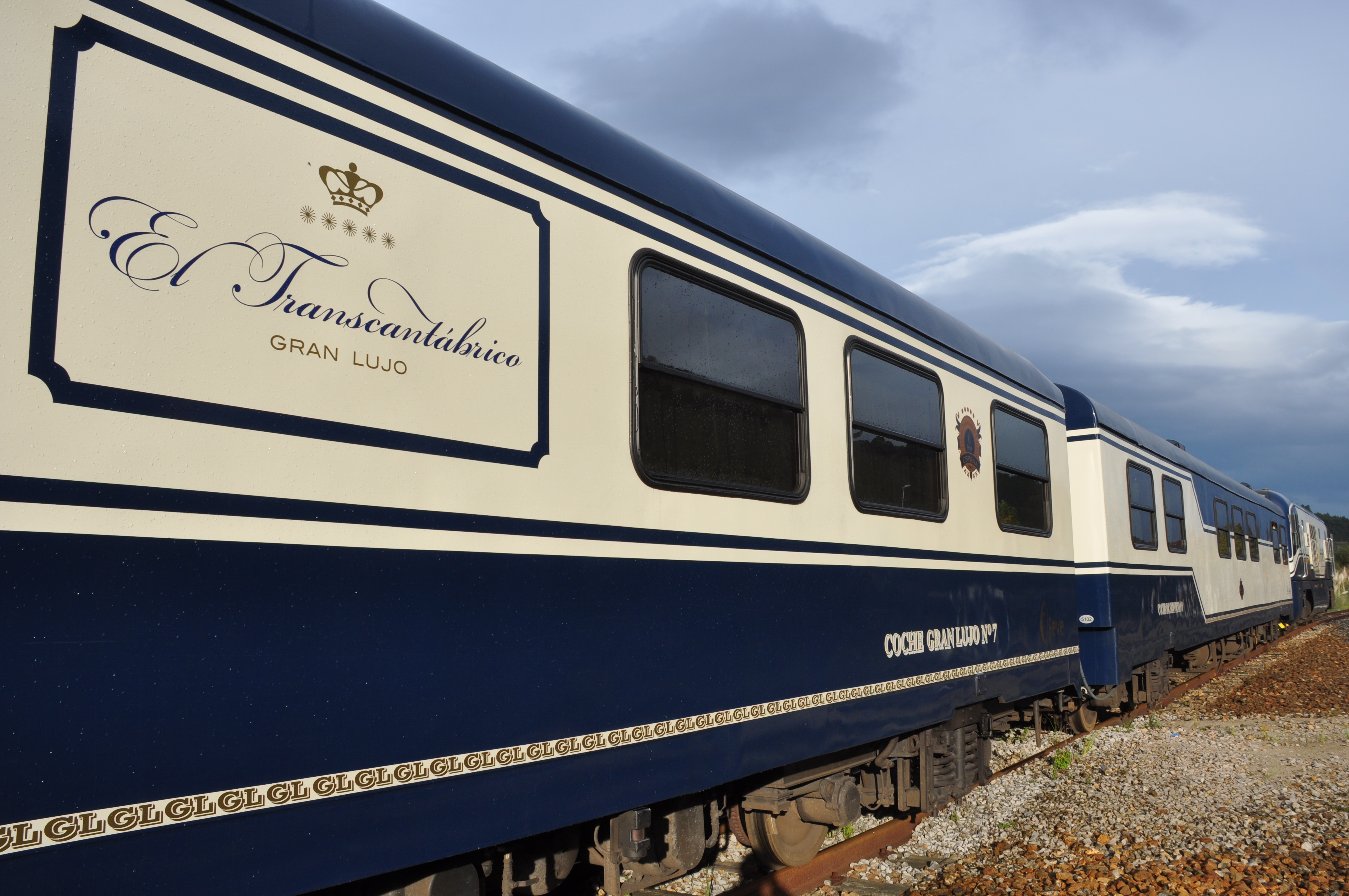
El Transcantabrico Gran Lujo, one of the World’s Top 25 Trains. Photo by Angela Walker.

The Gran Lujo is, without a doubt, an upgrade from the Clásico El Transcantábrico, and well deserves a place among the world’s great luxury trains. The design is well thought-out, making the most of the narrow-gauge space.

The staff is efficient and experienced, and the cabins are attractive, large and comfortable.

Besides the train, the touring and food (so much food!) were highlights, which require separate blog posts of their own.

Have you been on board the new train? Please let us know your impressions! (IRT’s Angela Walker, who has reviewed many of the World’s Top 25 Trains for IRT,  just returned from her eight-day journey across Northern Spain on Gran Lujo, traveling from Santiago to San Sebastian. This is the first of several posts. To see more of her photos, please click here.)

Rovos: Club-Like Comfort from Cape Town to Dar es Salaam

1 Sep

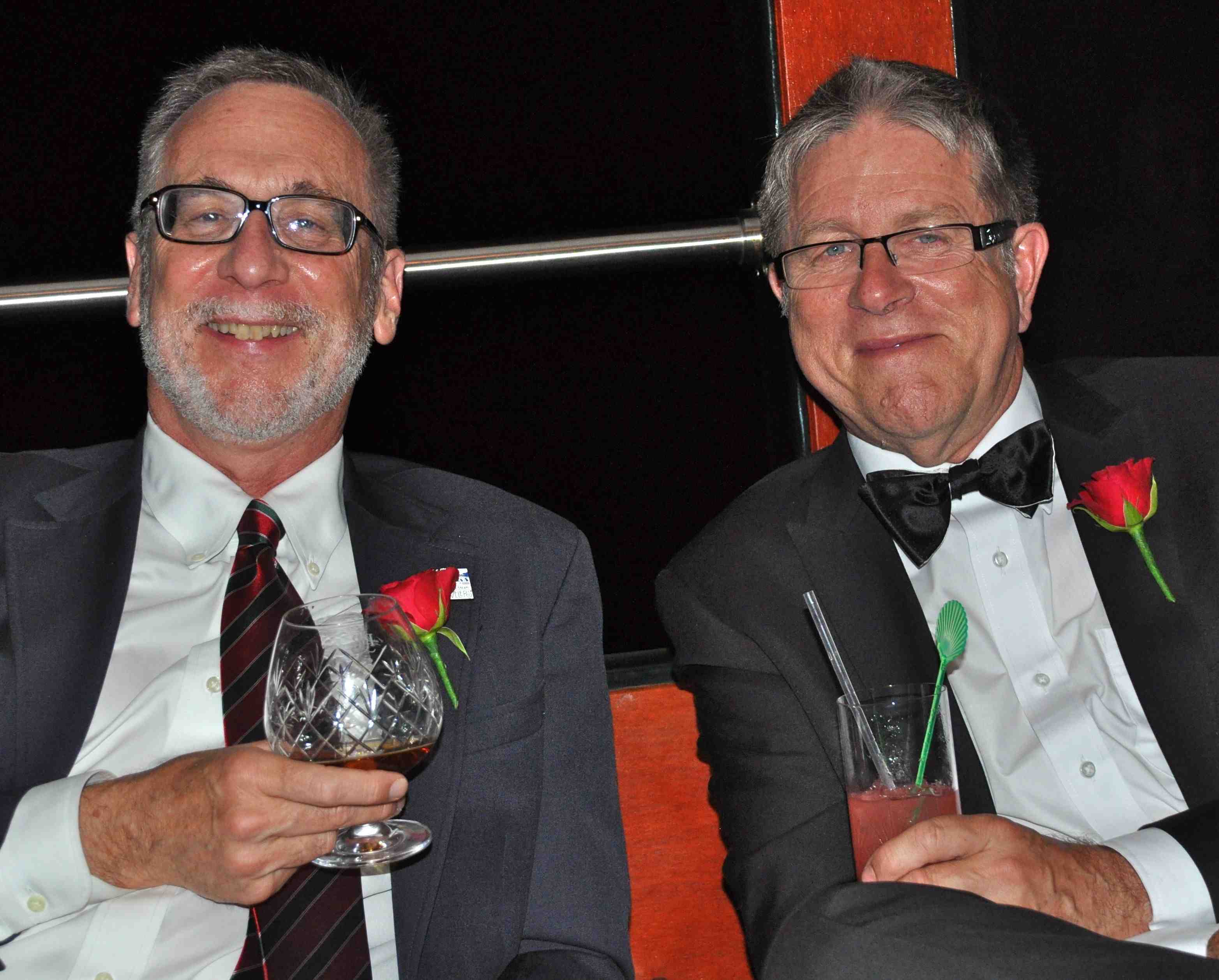
Society CEO Owen Hardy and member David Cowley, spruced up for the final dinner before arrival in Dar es Salaam, share a drink at the outdoor platform in the rear lounge car. IRT Photo by Eleanor Hardy

(Continued from Part 1)

While the Eastern & Oriental Express or the Venice Simplon-Orient-Express probably win the top awards for utter beauty, Rovos Rail’s Pride of Africa is more like a comfortable London club.

That’s where we spent some of the best moments of our recent Cape Town – Dar es Salaam “Owners’ Choice” group tour last month. (To read my first installment, click here.)

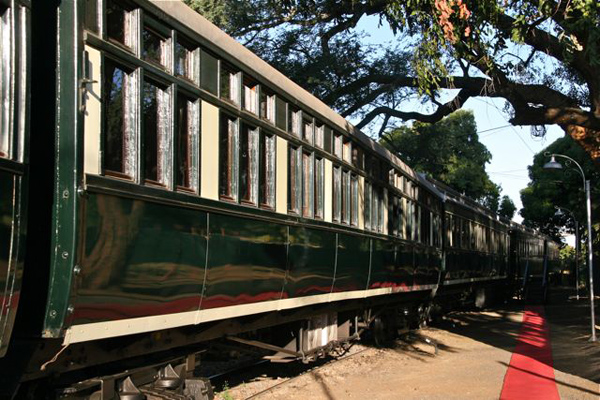
Interiors, constructed in Rovos’ Capital Park headquarters in Pretoria, are outfitted in dark, varnished Rhodesian teak, with polished brass, thick carpeting and, in the diners, gleaming silver, crystal and cutlery.

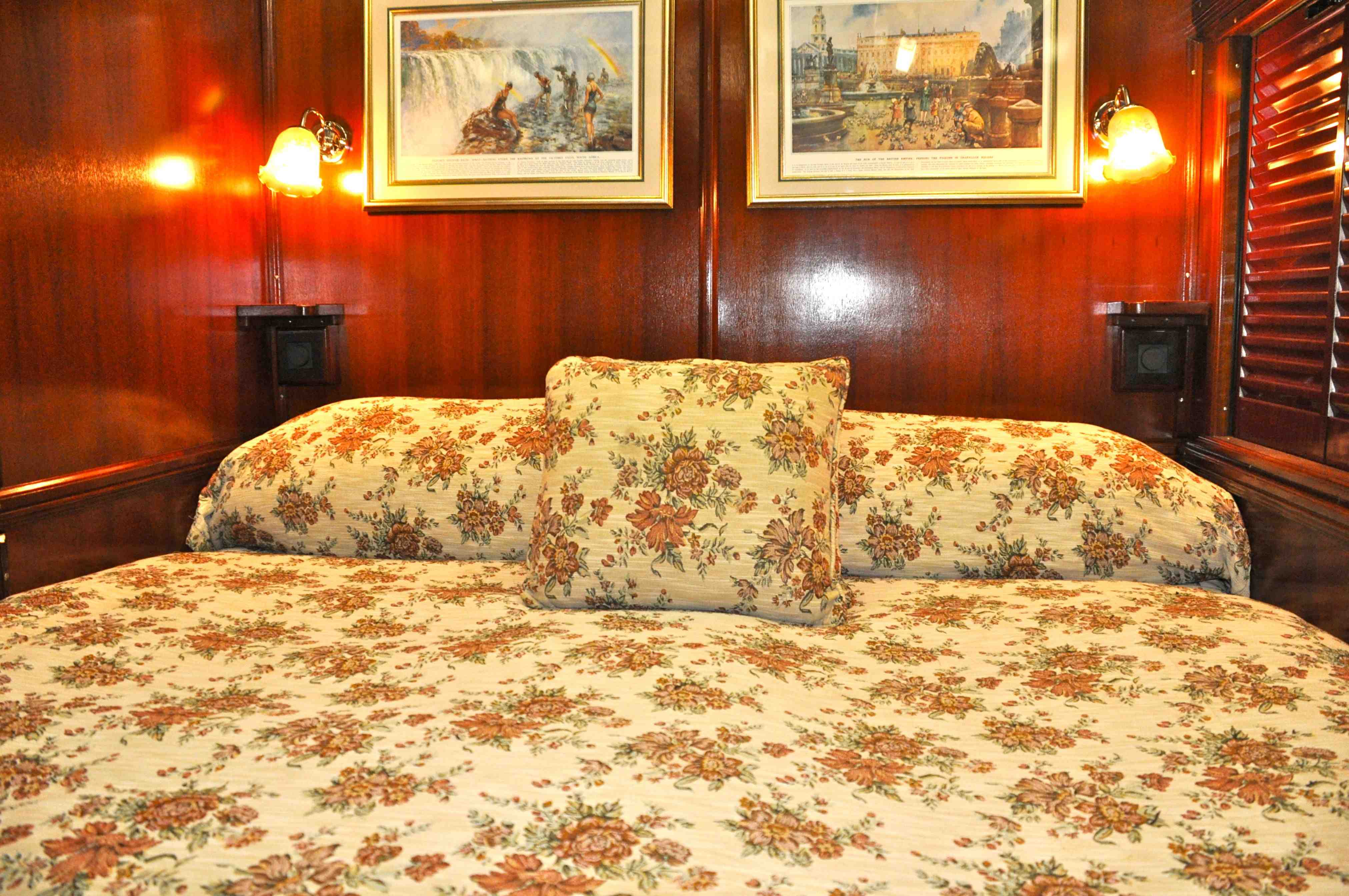
King size bed in Rovos Rail Deluxe Suite. IRT photo by Eleanor Hardy

Our deluxe suite was spacious and tastefully appointed, with all the standard amenities – shampoo, conditioner, fine soap, shoe mitt, etc. — one would expect of a five-star hotel.  We loved it: it was the biggest compartment we have experienced. And if we were delighted, our IRT guests in the Royal Suite, with its two armchairs and full-sized Victorian porcelain bathtub, were thrilled with their half-a-train-car accommodation.

Our first day on the train commenced as so many would thereafter: with leisure spent in the privacy of our cabin, followed by a visit down to the rear lounge car to enjoy its over-sized outdoor section. Soon afterwards, we heard the mellifluous sound of chimes,  rung by a Rovos Rail staff member walking the length of the train, signaling that lunch was being served.

Meals on Rovos Rail are grand affairs. Lunch and dinner typically include four courses.

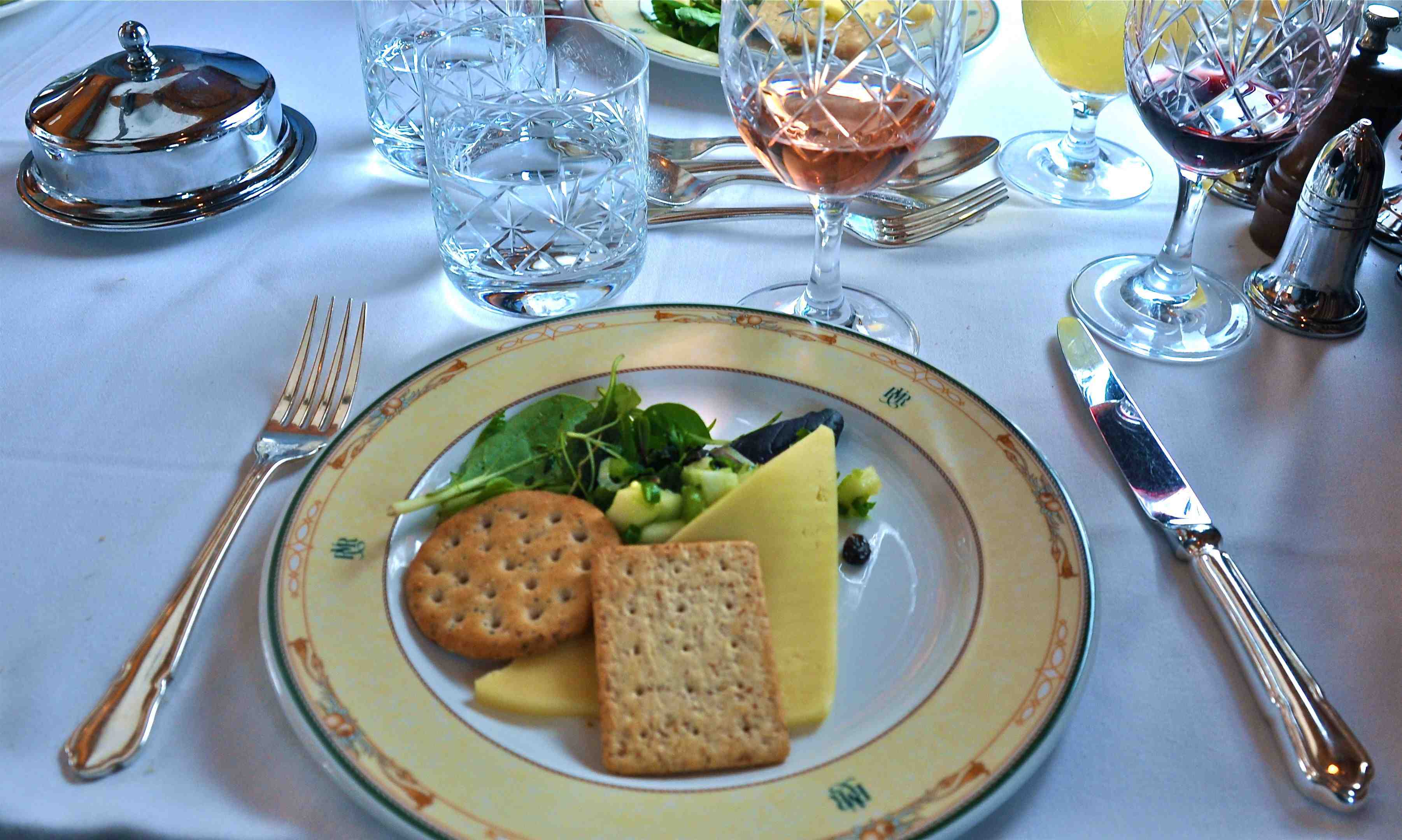
Cheese course is served at lunch and dinner. IRT photo by Eleanor Hardy

Following a starter is the main course, which could be fish, lamb, beef or, more exotically: springbok (tastes like steak) or ostrich (also tastes like steak). Imaginative vegetarian options also are available. Next comes a cheese course, followed by dessert and coffee or tea.

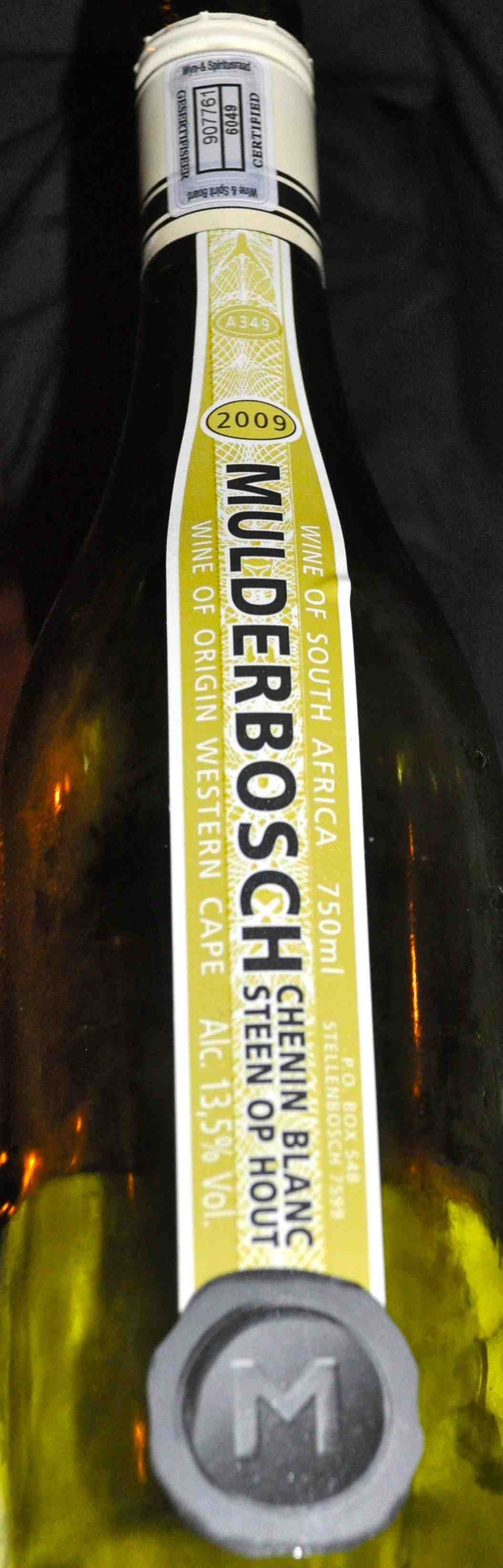
Mulderbosch Chenin Blanc

Mulderbosch Chenin Blanc

A word of warning about meals: each course is paired with an excellent South African wine. On our trip, wine stewards Gareth van Wyk and Michael van Rooyen enthusiastically described their wines’ provenance and taste characteristics.

But while sometimes one wine will work for two courses, many times each course will be paired with a different wine, including, at dessert, a liqueur such as Kahlua or Frangelico, or one of the many fine South African dessert wines.

If you’re like me, you’ll want to try them all, but the cumulative effect can be debilitating. And don’t forget: there are many all-train days, when your natural tendency will be to move following the meal to one of the two lounges, where more (“free”) wine and spirits are flowing. So pace yourself.

Fidgety types might wonder what one does all day on a train. On the Pride of Africa, the list of possibilities is long – and each passenger seems to develop his own routine and favorite perch.

In our case, the most serious photographers hung out at the rear. In fact, they rarely left their privileged positions.

Waving children

Children love trains everywhere – including Africa. IRT photo by Eleanor Hardy
(So don’t be afraid to speak up and request equal time. There’s nothing better than viewing an African sunset from that vantage point. And whole villages seem to empty their children beside the tracks to wave to the train people rattling by. Waving back, one can’t help but feel a bit like visiting royalty.)

Other people liked the indoor section of the lounge, with its sumptuous cakes and finger sandwiches during afternoon tea, or the ready drinks from the bar, available anytime.

Still others liked the front lounge and the services of Nicholas Schofield, the train historian, who delivered five lectures, each about an hour, on African history, politics and culture in his singular, breathless style, which makes him impossible not to enjoy.

Unlike many on-board academics, who seem to hide in their cabins between lectures, the ever-chipper Mr. Schofield makes himself available to all. Arrive early to get the best seats; double-check timings daily because they are subject to change.

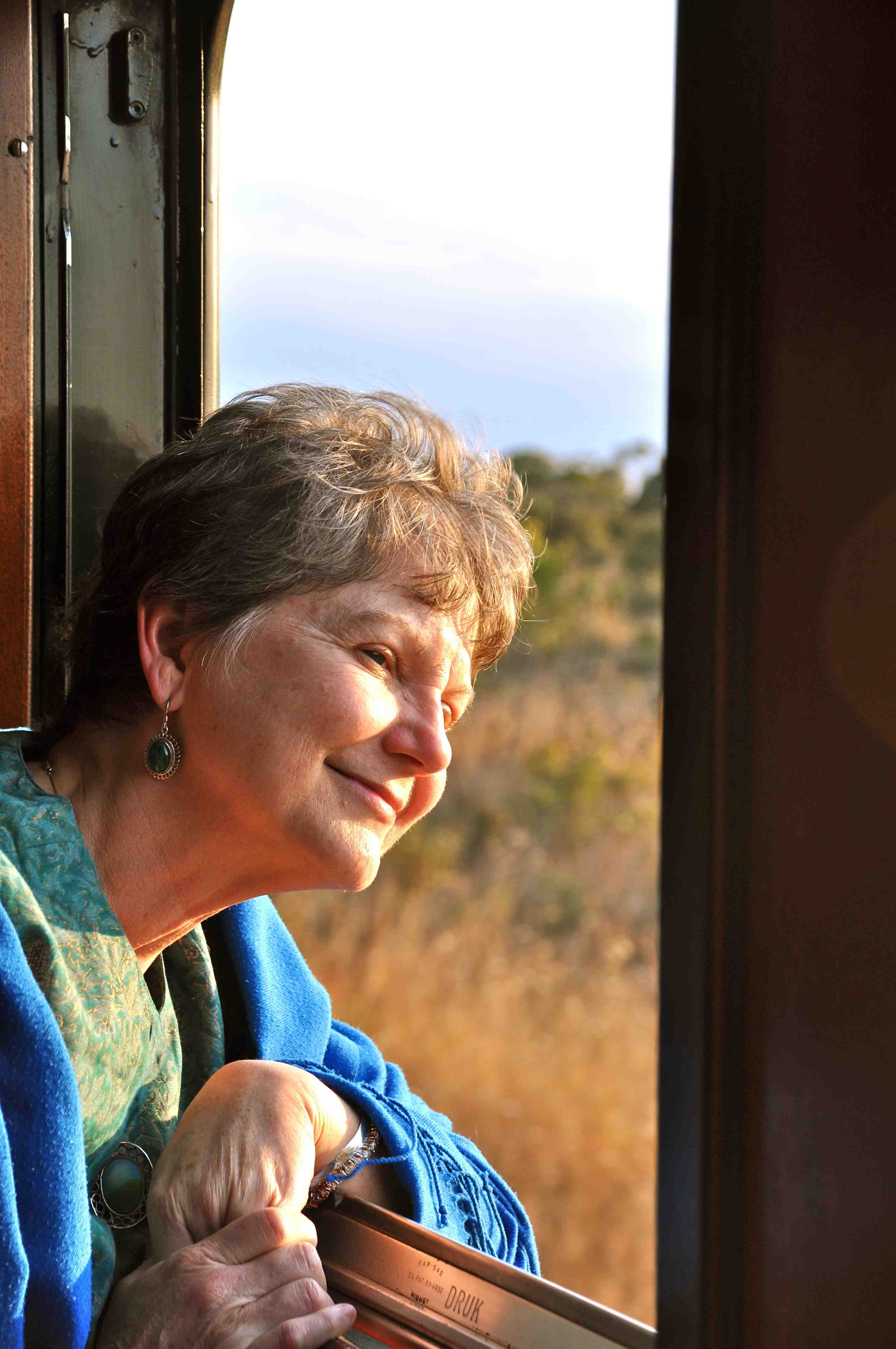
Looking out a Rovos Rail window.

IRT Society President Eleanor Hardy enjoys her favorite pasttime: looking out her compartment window. IRT photo by Owen Hardy

Another option is to visit hairdresser Craig Geater’s salon – included in your fare. After almost 3 weeks in Africa, I definitely was ready for a haircut and beard trim, which Craig expertly provided in his tiny quarters. But be reasonable in your expectations. You’re in a moving, sometimes jolting train, after all, so don’t ask for a shave with a straight-edge razor. No one wants an impromptu performance of Sweeney Todd. But it was a blast to be rolling along, Tanzania’s gorges and mountains rolling by, while Craig trimmed our hair.

Finally, if you’re the quieter type, you might prefer simply sitting in your private room, looking out of one of the multiple windows, as did IRT travelers Sam and Betty Nuckolls. Sipping their Jack Daniels, they happily watched Africa unfurl as if they had a front-row seat at an old-fashioned Cinerama movie theatre.

All in all, it’s a great way to travel.

(For up-to-date price and date info, click here: Rovos Rail Cape Town – Dar es Salaam)

Futuristic Luxury Train to Call at Quebec Ski Resort Complex

25 Aug

Credit: Morelli Designer

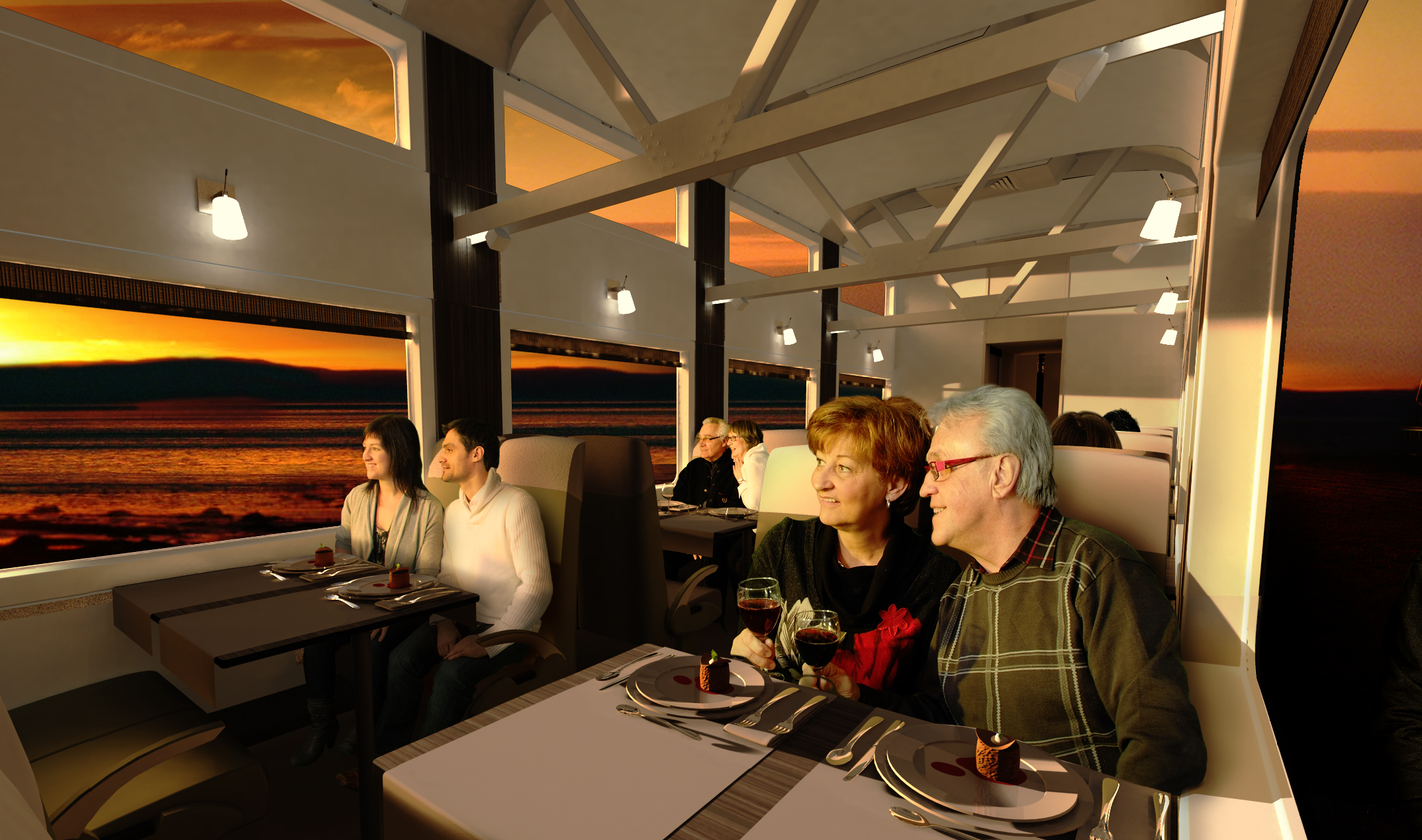
Two years in the making, and inspired by a co-founder of the Cirque du Soleil, Canada’s “Train de Le Massif de Charlevoix” is scheduled to begin running Sept. 9 between Québec City and La Malbaie.

The eight-car train will provide guests with scenic vistas along the St. Lawrence River, fine dining and a high-tech, touristic program, its promoters say. The one-way trip will last three and a half hours.

The train is a project of the Canadian ski resort and leisure company Le Massif de Charlevoix.

During the trip, the company says, “passengers discover the Charlevoix terroir at its best, savoring a refined lunch served on the morning cruise and a lovely four-course gastronomic dinner on the return journey. All along the way, a unique multi-media presentation accompanies the rail experience.”

Le Massif de Charlevoix

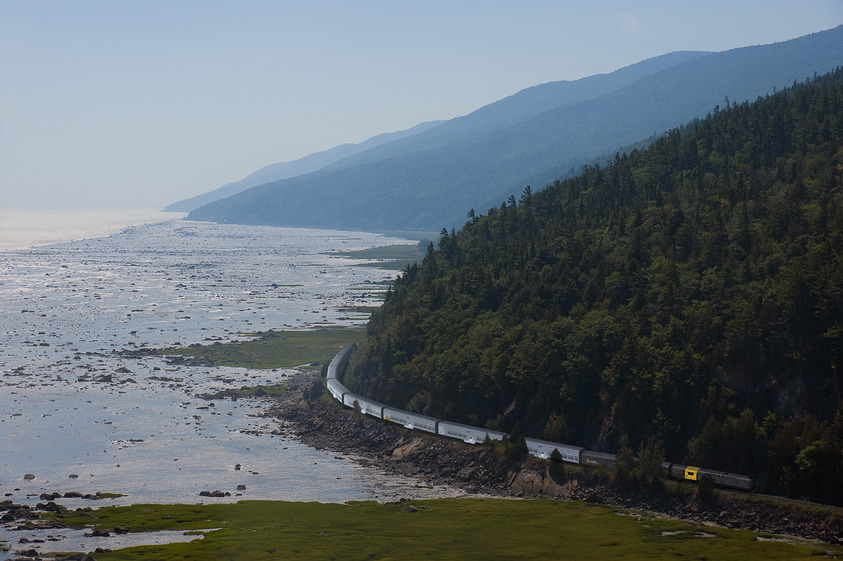
The 87-mile route hugs the St. Lawrence River shoreline, passing the 272-foot Chute Montmorency waterfall, the Cap Tourmente National Wildlife Reserve (famous for bird-watching) and several historic seaside towns.

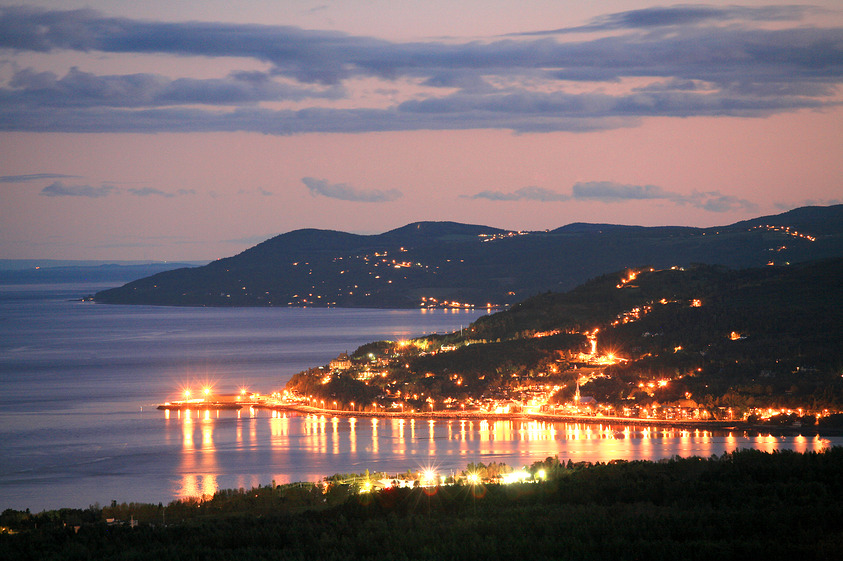
Upon arrival in La Malbaie, passengers have a three-hour stopover for strolling down the pier, wandering along the shores of the St. Lawrence River, admiring the Fairmont Le Manor Richelieu (a luxury Quebec resort) or visiting regional attractions, the company says.

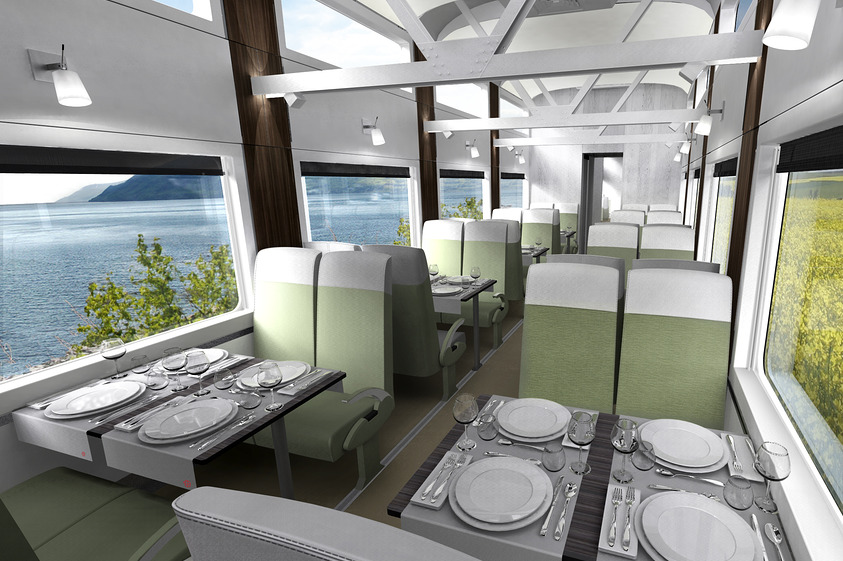
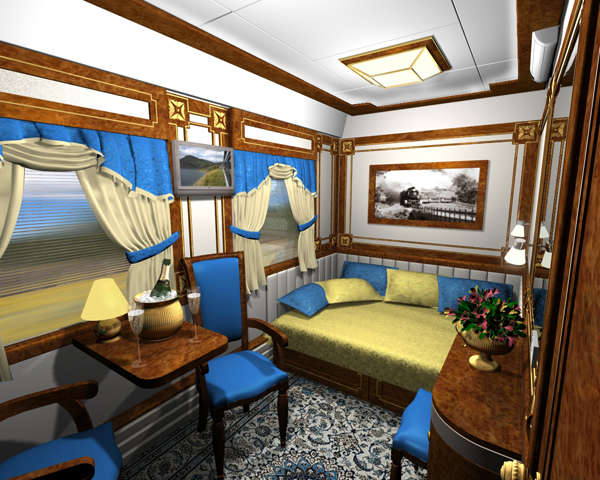
Artist's conception of the Train of le Massif de Charlevoix

In addition, the operator is encouraging rail travelers to stay in the area for extended visits of one or two nights. Activities such as sea kayaking on the St. Lawrence River, paragliding, bicycling, hiking, rock-climbing and a visit to the Charlevoix Museum all are possible in the immediate area.

For a more extended vacation, passengers can stay at the Fairmont Le Manor Richelieu, which boasts a casino, golf courses, spa, restaurants and carriage rides. (One of IRT’s favorite hotel groups: we are preferred agents.)

The train is one element in a massive recreation project by Groupe Le Massif de Charlevoix. The project also encompasses a ski resort and the Hôtel La Ferme lodging complex.

Le Massif de Charlevoix

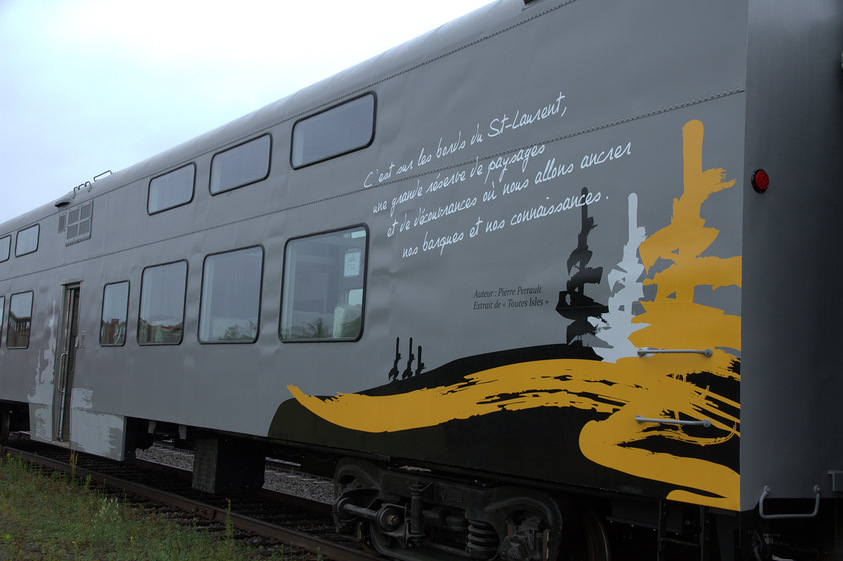
The train’s bi-level cars were built by the St. Louis Car Company in 1955 and 1956 for the Chicago and Northwestern Railway. Before being sold to Groupe Le Massif, they were operated in Chicago commuter service.

According to the operator, the railroad cars resemble an architect-inspired “mobile structure more than a train.”

“Between now and December,” the operator says, “eight dove-grey railcars inscribed with poetic texts… will be coupled to their charcoal grey locomotives.”

Those locomotives are two 1,800 hp RS-18 locomotives built by Montreal Locomotive Works. They’ll pull two power cars that double as baggage cars and eight passenger cars.

La Malbaie - Le Massif de Charlevoix

The service will begin with two 60-passenger cab cars. By the end of the fall season, the company expects to have added an additional six passenger cars, each with a capacity of 68 passengers. The cars will have 11-foot ceilings held up by solid steel beams.

Each passenger car will be equipped with a kitchen designed to serve approximately 70 gourmet lunches and dinners. Menus for the on-board dining service have been developed by Jean-Michel Breton, Fairmont Le Manoir Richelieu Executive Chef.

Round trip adult fare is $249 Canadian. The fare includes the meals and program aboard the train. The train is scheduled to depart Quebec at 10 a.m., arriving at La Malbaie at 1:30 p.m.

The train will depart La Malbaie at 4:30 p.m., with arrival in Quebec at 8 p.m. The train will operate Friday through Sunday through Sept. 18, and Wednesday through Sunday beginning Sept. 21.

For reservations and more information, call (418) 632-5876 or, toll free, (877) 536-2774.  If you would like IRT to organize a package for you, we’d be happy to.  Our reporter, Anthony Lambert of the UK, is scheduled to review this next spring. Watch this space.

Meanwhile, while we sincerely wish this project well, in the 28 years we’ve been in this business, we’ve reported on many ambitious luxury rail projects. Most have been short-lived or have never reached the operational stage. What are your thoughts about this one?

Trans-Siberian Express Adds Luxurious Suites, Upgrades Restaurant Cars, Services

20 Aug

The Imperial Suite, newest and largest accommodations on the Golden Eagle (Photo by GW Travel)

Want to do the Golden Eagle Trans-Siberian Express but worried about tight quarters?

Starting next year, you can book the new, extra-large Imperial Suite on the Golden Eagle Trans-Siberian Express, the top private train in Russia and Central Asia.

The Golden Eagle train set will have one Imperial Suite, according to the train’s operator, GW Travel. The dining cars and services also are being upgraded.

The Imperial Suite measures 120 square feet and will boast a luxurious, fixed, king-sized bed and a dedicated sitting area with dressing table. It also will include a large en-suite shower, under-floor heating, individual air-conditioning, wardrobe, DVD/CD player, and two large picture windows.

Imperial Suite guests will receive a selection of complimentary drinks from the premium bar list, complimentary laundry service, and room upgrades to the next available category at selected hotels (depending on trip itinerary). They also will have the option of dining in-suite, attended by their private butler.

The wait staff on a Golden Eagle dining car in their new uniforms (Photo by GW Travel)

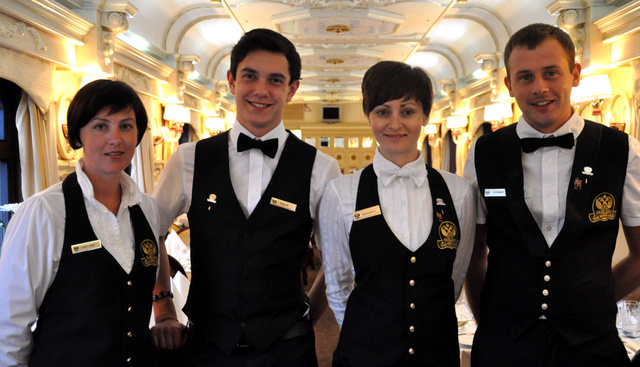
Meanwhile, the two dining cars on the train – 64-seats on each – have been redesigned to allow guests more space while simultaneously adding a central buffet area for some self-service breakfast items. New china and crystal and new staff uniforms will also be visible aboard the Golden Eagle next year.

The news we’re most excited about affects the entire train: improving communication on board and upping the level of service and the dining experience. The position of maitre d’ has been added to improve communication between the wait staff, kitchen, and passengers, and a new executive chef will introduce a new level of quality and presentation in the dining car menus. All of these are being implemented this season. We have a number of Society of IRT guests on board who will report when they return from Russia.

In addition to Russian, new Golden Eagle Maitre D’ Yekaterina Borovikova speaks fluent English and French. Photo by GW Travel

Other enhancements include new bathrobes and towels, new l’Occitane on-board toiletries, internet connections in the bar car, gift certificate and a coffee table memory book for all passengers, and new wireless headsets for off-train excursions.

Also, a champagne reception is being added for guests departing from Moscow’s Kazansky Station and, in Vladivostok, the “Far East Fleet Orchestra” will play for passengers on arrival and departure;

For Silk Road travelers, a reception will be held at Registan Square, and a light show will entertain guests in Samarkand.

To view the itineraries available on the Golden Eagle, please click here. For more information, call (800) 478-4881 in the U.S. and Canada, (502) 454-0277 elsewhere.

And if you’ve traveled on this train, let us know what you think.

Britain Ditches the Dining Car (What’s the World Coming To?)

20 May

Dinner in the diner: Eleanor Hardy aboard the Venice Simplon-Orient-Express.

As I write this, the last patron on a publicly operated British dining car might be enjoying his last bite. Traditional, public dining car service in Britain is over.

“There will be lavish helpings of nostalgia aboard the 19.33 from London’s King’s Cross to Leeds,” said Michael Williams in yesterday’s Daily Mail. No matter. The bean-counters have decided that traditional railway dining cars have no business in Britain. Read Williams’ entire story here.

The news is sad but not surprising, as civilization in general, and public rail travel in particular, continue their downhill slide. True, there still are good meals to be had aboard Germany’s ICEs and in Switzerland’s main-line dining cars. Even Amtrak does its best with what it has. But the trajectory is unmistakable.

Williams quotes a transport analyst, Barry Doe, who claims dining cars could be profitable, if only the suits in accounting would realize the marketing potential of 200 or so hungry, captive customers on an 8-hour train ride.

We’ve certainly tried to do our part. Over the years, The International Railway Traveler has cheered on those brave souls who’ve tried to make dining cars profitable.

There was AB Svenska Orientexpressen, two traditional navy blue restaurant cars named after the owner’s grandmothers, which ran on trains of the Swedish State Railways.

There was McDonald’s brief experience with fast-food cars (complete with Golden Arches) on the railways of Switzerland, of all places.

And — at least until recently — in Capetown, South Africa, Biggsy’s Restaurant Carriage and Wine Bar was attached to the Cape Town-Simon’s Town commuter train.

The ventures failed in Sweden and Switzerland. And just now I tried phoning Biggsy’s, with “number no longer in service” the response (anyone have any info?).

IRT Society members enjoy dinner aboard the Royal Scotsman, 2005.

We love dining on the Venice Simplon-Orient-Express, Rovos Rail’s Pride of Africa and the Royal Canadian Pacific. And Britain’s sad news is all the more reason to enjoy the incredible fare on such trains as the British Pullman and the Royal Scotsman.

But the loss of genuine, full-service dining on the public rails brings us a step closer to an alien, digitized, impersonal world.

Or perhaps our readers know of public trains which still offer traditional, civilized dining experiences. If so, please let us know.